
Nitrided ferro manganese, also widely referred to as nitrogen-bearing ferromanganese or ferromanganese nitride, is a specialized ferroalloy product made by infusing medium and low carbon ferromanganese with high-purity nitrogen under controlled high-temperature conditions. Unlike conventional ferromanganese, this modified alloy combines stable nitrogen content and high manganese purity, making it a core alloying additive for high-performance steel manufacturing across automotive, shipbuilding, aerospace and heavy machinery sectors. As global demand for high-strength, corrosion-resistant and cost-effective special steel surges, nitrided ferro manganese has become a critical material to replace expensive nickel and optimize steel mechanical properties, with ongoing industry innovations further boosting its application scope in 2025-2026.
Latest 2025-2026 Industry News & Trends: The global ferroalloy sector is pushing forward green and high-purity production upgrades for nitrided ferro manganese, focusing on low-carbon manufacturing processes, higher nitrogen utilization efficiency and ultra-low impurity control. Leading production teams are partnering with material research institutions to optimize solid-phase nitriding parameters, shorten production cycles and reduce energy consumption, while fine-grained powder and cored wire forms are gaining wider adoption for precise steelmaking addition. There is also a growing focus on customized nitrogen content grades to match special steel and heat-resistant steel production demands, aligning with global low-carbon steel development goals.
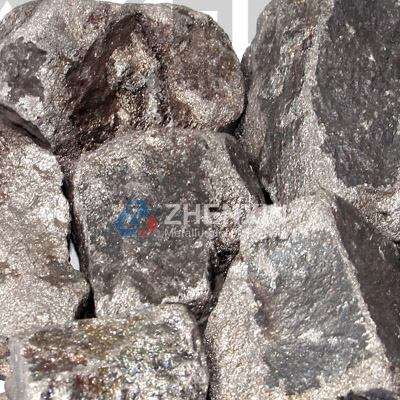
Core Product Features
- Exceptional Nitrogen Utilization Rate: Delivers consistent nitrogen release in steelmaking, with minimal loss and uniform dispersion in steel matrix, ensuring stable alloying effects.
- Balanced High Purity: Combines high manganese content and adjustable nitrogen content to meet diverse special steel formula requirements, with targeted nitrogen levels for different steel grades.
- Ultra-Low Impurity Content: Strictly controls harmful elements including sulfur and phosphorus, effectively avoiding steel defects caused by impurities and improving steel toughness and corrosion resistance.
- Strong Cost-Saving Performance: Acts as a reliable nickel substitute in stainless steel and heat-resistant steel production, significantly cutting raw material costs without compromising steel performance.
Available Product Forms
Nitrided ferro manganese is supplied in multiple customizable forms to fit different steelmaking processes and feeding methods, covering all mainstream application scenarios:
- Nitrided Ferro Manganese Powder: Fine-grained powder with uniform particle size, suitable for precise alloying and small-batch special steel production, easy to store and transport.
- Nitrided Ferro Manganese Briquettes: Pressed compact briquettes with high density, low dust and easy feeding, ideal for large-scale steelmaking and continuous casting production lines.
- Nitrided Manganese Cored Wire: Encapsulated cored wire product for accurate and controllable addition in ladle refining, realizing uniform alloying and improving steel quality stability.
Standard Chemical Composition (WordPress Friendly Table)
Below are the standard chemical composition specifications for mainstream nitrided ferro manganese grades, with clear limits for key elements to ensure stable product quality and compliance with steelmaking standards. This table is formatted for WordPress basic editor to prevent misalignment:
| Grade | Mn (Min %) | C (%) | Si (Max %) | S (Max %) | P (Max %) | N (%) |
| FeMn80N | 80.0 | 0.1-0.5 | 2 | 0.03 | 0.15 | 1.5-2.5 |
| FeMn70N (Low Carbon) | 70.0 | 0.1-0.5 | 2 | 0.03 | 0.30 | 4-8 |
| FeMn70N (Medium Carbon) | 70.0 | 0.5-2.0 | 2 | 0.03 | 0.35 | 4-8 |
Key Industrial Applications
Nitrided ferro manganese is an indispensable alloying agent and additive in modern high-performance steel production, with core applications covering multiple high-value industries:
- Used as a dual nitrogen and manganese additive for high-hardness alloy steel, stainless steel and heat-resistant steel production, widely applied in automobile manufacturing, ship hull construction, aviation parts and precision machinery.
- Effectively improves steel hardness, tensile strength and overall mechanical properties, refines steel grain structure and expands the austenite zone, enhancing steel durability and high-temperature resistance.
- Serves as a cost-efficient alternative to metallic nickel, a high-cost raw material, helping steel mills reduce production costs while maintaining or improving steel performance indicators.
- Ideal for manufacturing high-strength low-alloy steel and corrosion-resistant special steel, meeting strict performance standards for engineering machinery and marine equipment.
Production Methods & Process Flow
There are two mature production processes for nitrided ferro manganese, with solid-phase nitriding being the most widely used in industrial mass production due to its high nitrogen content and stable quality:
Liquid-Phase Nitriding
Liquid-phase nitriding is carried out in molten ferromanganese state, featuring high product density, good strength and high nitrogen utilization in steelmaking. However, this process can only achieve a nitrogen content of around 2%, which cannot meet the high-nitrogen demand of modern special steel, so it is only used for specific low-nitrogen steel applications.
Solid-Phase Nitriding (Mainstream Process)
Solid-phase nitriding is the preferred industrial method for high-nitrogen nitrided ferro manganese, with optimized process parameters and stable output. The complete flow includes:
- Select high-quality medium and low-carbon ferromanganese as raw materials to ensure low initial impurity content.
- Crush and sieve raw materials to obtain uniform 80-100 mesh ferromanganese powder, ensuring full contact with nitrogen during reaction.
- Process powder into direct use form or press into compact blocks based on subsequent nitriding equipment requirements.
- Load powder or blocks into a vacuum heating furnace, conduct nitriding reaction at 900-1100℃ under 0.1MPa pressure for 8-12 hours.
- Perform natural cooling inside the furnace to stabilize product structure and avoid nitrogen loss.
- Conduct quality inspection, packaging and safe delivery after passing all composition tests.