
In the world of advanced metallurgy and materials science, powders with specific compositions and particle characteristics play a crucial role in the development of high-performance components.
One such material is atomized silicon iron powder, a specialized alloy powder that combines the beneficial properties of both silicon and iron in a finely distributed particulate form.
This article introduces the fundamentals of atomized silicon iron powder, explores its production process, and highlights its key applications across various industries.
What is Atomized Silicon Iron Powder?
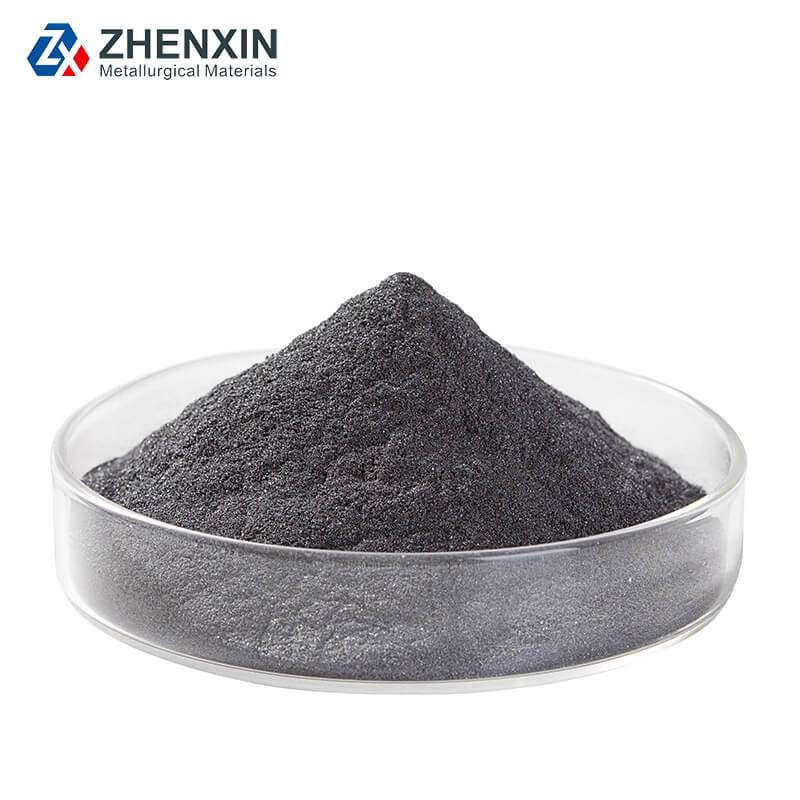
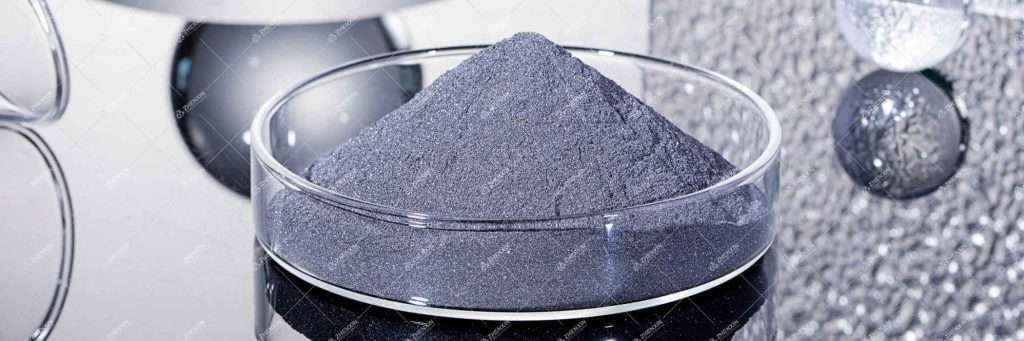
Atomized silicon iron powder is a ferrous-based powder alloy that typically contains iron (Fe) as the base metal and a specific proportion of silicon (Si), generally ranging from 10% to 20% by weight, depending on the required performance characteristics. The term atomized refers to the method used to produce the powder: molten metal is dispersed into fine droplets and rapidly cooled to form solid particles.
The atomization process can be conducted using water atomization or gas atomization, each resulting in powders with distinct particle shapes, sizes, and surface characteristics. Water-atomized powders usually have irregular shapes and higher surface roughness, while gas-atomized powders are more spherical and uniform, offering superior flowability and packing density.
Key Properties of Atomized Silicon Iron Powder
Atomized silicon iron powder is valued for its combination of magnetic, mechanical, and thermal properties, which are influenced by both its chemical composition and particle morphology. Some of its notable characteristics include:
High magnetic permeability and low core loss, making it suitable for magnetic applications.
Excellent oxidation resistance due to the silicon content, which promotes the formation of a protective oxide layer.
Good mechanical strength and hardness, especially when compacted and sintered.
Enhanced electrical resistivity, which reduces eddy current losses in electromagnetic applications.
Consistent particle size distribution and good compressibility for powder metallurgy processes.
Applications of Atomized Silicon Iron Powder
Due to its versatile properties, atomized silicon iron powder finds applications in a wide array of industries, particularly in automotive, electrical, electronics, metallurgy, and additive manufacturing. Below are some of its most prominent uses:
- Magnetic Components and Soft Magnetic Composites (SMCs)
One of the primary uses of atomized silicon iron powder is in the manufacture of soft magnetic composites, which are crucial in electric motors, inductors, transformers, and electromagnetic shielding devices. The powder is compacted and sintered into complex shapes with isotropic magnetic behavior, offering lower eddy current losses and improved frequency response compared to traditional laminated steel cores. - Powder Metallurgy (PM) Parts
In the automotive and machinery sectors, atomized silicon iron powder is used to produce wear-resistant and heat-resistant structural components via powder metallurgy. Its excellent compressibility and mechanical strength make it suitable for sintered gears, pulleys, cams, and bearing housings. - Additive Manufacturing (3D Printing)
The development of metal 3D printing technologies, such as binder jetting and selective laser melting (SLM), has expanded the use of spherical atomized silicon iron powders. Their high packing density, flowability, and controlled oxidation behavior make them ideal for producing high-precision components with complex geometries in electric vehicles and aerospace applications. - Welding and Brazing
Atomized silicon iron powder is also used as an additive in welding and brazing materials to enhance the mechanical and thermal properties of weld joints. It improves wetting, reduces porosity, and contributes to a stronger metallurgical bond. - Electromagnetic Interference (EMI) Shielding
Thanks to its magnetic and conductive properties, this powder can be utilized in EMI shielding applications for electronic devices. When incorporated into coatings, plastics, or elastomers, it helps block or absorb electromagnetic waves that interfere with electronic circuitry. - Chemical and Metallurgical Additives
In some cases, silicon iron powders are used as deoxidizers and alloying agents in steelmaking, where precise additions of silicon and iron are needed to modify the chemical composition and improve the final product’s properties.