
Silicon slag is a by-product generated during the smelting process of industrial silicon (metallic silicon), which was once regarded as industrial waste but has been gradually valued for its high recycling value in recent years. With the in-depth advancement of the global circular economy and the continuous optimization of resource utilization technologies, silicon slag has become an important auxiliary material in multiple industries, and its market demand is showing a steady growth trend.
Different from traditional industrial waste, silicon slag is characterized by high silicon and high carbon, with silicon dioxide (SiO₂) and carbon (C) as the main components, and a small amount of metal impurities such as iron and aluminum. These components determine its unique application value in metallurgy, chemical industry, building materials and other fields.
Silicon Slag Chemical Composition & Specifications
The quality of silicon slag is mainly determined by its silicon content, which is usually divided into different grades according to the silicon content. The following is the detailed chemical composition and specifications of common silicon slag grades, which can be customized according to customer needs in actual production:
| Grade | Si(%) | C(%) | S(%) | P(%) |
| Silicon Slag 45 | 45 | 4.0 | 0.1 | 0.05 |
| Silicon Slag 50 | 50 | 4.0 | 0.1 | 0.05 |
| Silicon Slag 60 | 60 | 4.0 | 0.1 | 0.05 |
| Silicon Slag 65 | 65 | 4.0 | 0.1 | 0.05 |
Can Silicon Slag Replace Metallic Silicon Directly?
Many manufacturers have questions about whether silicon slag can replace metallic silicon to reduce production costs. The answer is negative: silicon slag cannot directly replace metallic silicon in most scenarios. The core reason lies in the high carbon content of silicon slag, which will affect the quality of the final product.
A practical case shows that a foundry once tried to replace 30% of metallic silicon with silicon slag in the production of aluminum alloy castings. However, due to the high carbon content in the silicon slag, a large number of porosity defects appeared in the castings after smelting, resulting in an 18% drop in product qualification rate and increased production costs instead of reducing them. Therefore, silicon slag can only be used as an auxiliary material, not a direct substitute for metallic silicon.
2026 Silicon Slag Industry Latest News & Market Trend
According to the latest market research report released in February 2026, the global silicon slag market sales volume reached 5.613 billion US dollars in 2025, and it is expected to grow to 8.337 billion US dollars by 2032, with a compound annual growth rate (CAGR) of 5.9% from 2026 to 2032. This growth is mainly driven by the increasing demand for resource recycling and the continuous expansion of application fields.
In recent years, with the promotion of the “dual carbon” strategy in various countries, the recycling and high-value utilization of industrial solid waste have become the focus of the industry. Silicon slag, as a typical industrial by-product, has been paid more attention to its resource utilization. At present, the technology of extracting valuable elements from silicon slag is constantly improving, and new application fields are being continuously developed, which will further promote the growth of the silicon slag market.
In addition, the construction of industrial solid waste recycling industrial chains in some regions has been initially formed. Silicon slag, as an important part of the chain, is realizing the transformation from “waste” to “resource”, and the market demand in metallurgy, building materials and environmental protection fields is expected to maintain a growth trend in 2026.
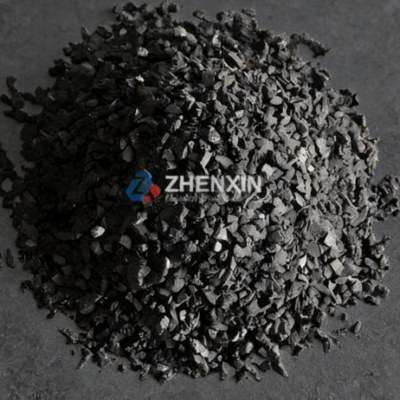
Silicon Slag Main Application Fields
With the continuous advancement of technology, the application fields of silicon slag are constantly expanding. The following are the main application scenarios and their unique advantages, which have been widely recognized by the industry:
| Application Fields | Specific Uses | Core Advantages |
| Metallurgical Industry | Steelmaking deoxidizer, alloy additive, smelting auxiliary material | Can replace part of ferrosilicon, significantly reduce production costs without affecting product quality |
| Chemical Industry | Raw material for silicon carbide (SiC) production, auxiliary material for chemical synthesis | Make full use of its high silicon and high carbon characteristics to improve reaction efficiency |
| Building Materials Industry | Processed into microsilica powder, used in high-performance concrete, building insulation materials | Enhance the strength and impermeability of concrete, improve the durability of building materials |
| Environmental Protection Field | Wastewater treatment adsorbent, heavy metal ion adsorbent | Porous structure, strong adsorption capacity, low cost and environmental protection |
Silicon Slag Key Characteristics
The application value and use precautions of silicon slag are closely related to its own characteristics. Understanding these characteristics can help manufacturers use silicon slag more rationally:
High carbon content: A large amount of coke is needed in the smelting process of metallic silicon. The unreacted residual carbon combines with silicon oxide to form the high carbon characteristics of silicon slag.
Porous structure: After smelting and cooling, silicon slag forms loose particles with a porous structure, which has strong water absorption and needs to be stored in a dry environment.
Potential self-ignition: The carbon component in silicon slag will slowly oxidize when in contact with air, and heat will accumulate during stacking, which may lead to self-ignition. Therefore, it is necessary to control the stacking height and ventilation conditions.
Silicon Slag Production Process
Silicon slag is the residual waste after the production of metallic silicon. The specific production process is as follows: raw materials such as silica and petroleum coke are put into a smelting furnace for high-temperature reaction to generate metallic silicon. During the reaction, unreacted raw materials and impurities form silicon slag. After cooling, the silicon slag is processed into different forms such as particles, blocks and balls according to the particle size requirements of different application scenarios and customers, so as to meet the needs of different industries.
Silicon Slag Price in 2026
The price of silicon slag is much lower than that of ferrosilicon and metallic silicon, which is one of the important reasons why it is widely used in industrial production. For manufacturers producing products that do not require extremely high hardness, using silicon slag to replace part of ferrosilicon can significantly reduce production costs and improve economic benefits.
In the Chinese market, as of March 2026, the reference price of silicon slag in Tianjin Port is about 500 US dollars per ton. The specific price will fluctuate according to factors such as silicon content, iron content, particle size and order quantity. Generally speaking, the higher the silicon content, the more stable the quality, and the higher the price.