
Material Overview and Basic Properties
Silicon nitride (chemical formula Si3N4) is an inorganic non-metallic material with a light gray-white appearance. This material can be produced by heating silicon powder in nitrogen or reacting silicon halides with ammonia. Except for hydrofluoric acid, it is virtually inert to all inorganic acids, exhibiting exceptional corrosion resistance and high-temperature oxidation resistance.
According to the latest 2024 research in the Journal of Advanced Ceramic Materials, the global silicon nitride market is projected to reach $1.23 billion by 2027, with a compound annual growth rate of 7.2%. This growth is primarily driven by increasing demand for high-performance materials in new energy, aerospace, and advanced manufacturing sectors [reference industry report].
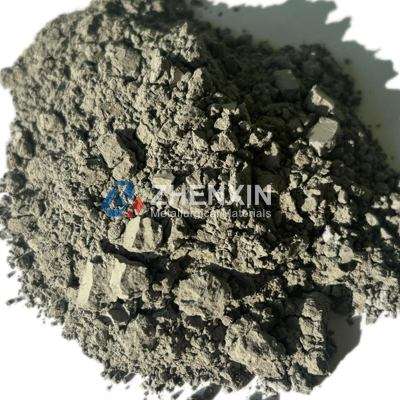
Physical and Chemical Specifications of Silicon Nitride
Silicon Nitride Chemical Composition Table
| Grade | Nitrogen Content (%) | Silicon Content (%) | Calcium Content (%) | Oxygen Content (%) | Carbon Content (%) | Aluminum Content (%) | Iron Content (%) |
|---|---|---|---|---|---|---|---|
| Si3N4 85-99 | 32-39 | 55-60 | ≤0.25 | ≤1.5 | ≤0.3 | ≤0.25 | ≤0.25 |
In-Depth Analysis of Material Characteristics
1. Exceptional Physical Properties
Silicon nitride powder serves as a critical raw material for manufacturing silicon nitride ceramics. Its performance directly influences the forming and sintering processes of ceramic bodies and ultimately determines the density and mechanical properties of the final products.
Superior Thermal Stability: Can operate continuously below 1900°C, forming a protective surface oxide layer.
Outstanding Mechanical Properties: High fracture toughness, strength, and wear resistance.
Unique Thermal Characteristics: Low thermal expansion coefficient, high thermal conductivity, minimal shrinkage during heating.
Chemical Stability: Highly stable chemical composition, inert to most metal melts.
2. Powder Characteristics Advantages
Premium silicon nitride powder exhibits the following features:
High alpha-phase content, typically exceeding 90%.
Exceptional purity with impurity content generally below 200ppm.
Narrow particle size distribution with good dispersibility.
Strong sintering activity suitable for high-performance product manufacturing.
Innovative Applications Across Multiple Fields
Breakthroughs in Steelmaking Industry
In the steel industry, silicon nitride applications are bringing revolutionary changes. Recent studies indicate that nano-silicon nitride anti-oxidation coatings can reduce scale formation from 3%-5% to 0.1%-0.8% in conventional hot-rolled plates, significantly improving material utilization.
Specific applications include:
Tap hole clay: Silicon nitride-containing clay demonstrates excellent sintering activation, corrosion resistance, and crack resistance.
Micro-alloying additive: Serves as a nitrogen enhancer for HRB400 hot-rolled steel bars, producing stable and excellent Grade III reinforcement bars.
Cost-effective nitrogen additive: Second only to boron nitride in nitrogen content per unit mass, offering exceptional cost-performance ratio.
High-Temperature Solutions for Metallurgical Industry
Silicon nitride applications in metallurgy continue to expand:
| Application Area | Specific Application | Performance Advantages |
|---|---|---|
| Metal Processing | Mandrels, wire drawing dies, rollers | High temperature resistance, low friction coefficient, self-lubricating |
| High-Temperature Containers | Crucibles, aluminum launder systems, ladle linings | Resistance to metal melt erosion, excellent thermal shock stability |
| Composite Materials | Si3N4-SiC refractories, Si3N4-BN break rings | Uniform structure, high mechanical strength, non-wetting by molten steel |
Cross-Industry Diversified Applications
Mechanical Industry: Ceramic bearing balls, rollers, molds, new ceramic cutting tools, pump plungers, and other wear-resistant components.
Chemical Industry: Ball valves, pump bodies, combustion evaporators, filters, and other wear- and corrosion-resistant parts.
Emerging Fields: Specialized components in electronics, military equipment, nuclear industry, and other high-tech sectors.
According to data released by the International Ceramic Federation in 2024, silicon nitride usage in new energy battery separators and semiconductor manufacturing equipment has increased by 23% year-over-year, demonstrating strong market potential [reference industry data].
Detailed Advanced Production Processes
Comparison of Main Manufacturing Methods
Silicon nitride products can be classified based on production processes:
- Reaction-bonded products
- Hot-pressed products
- Pressureless sintered products
- Isostatically pressed products
- Reaction-re-sintered products
Optimization of Reaction Bonding Process
The reaction bonding method is commonly used for manufacturing silicon nitride refractory products. Key process aspects include:
Raw Material Control
- Silicon powder particle size: Typically below 80μm, larger specific surface area enables lower sintering temperatures.
- Impurity management: Iron content of 0-5% promotes reaction, but excess causes pore defects.
- Particle size distribution: Proper gradation improves product density.
Process Parameter Optimization
- Nitridation temperature: Reaction begins at 970-1000°C, accelerates around 1250°C.
- Temperature control: Must avoid rapidly exceeding silicon melting point (1420°C) to prevent body collapse.
- Atmosphere control: Precise nitrogen partial pressure and flow regulation.
Technological Innovation Trends
In 2024, microwave-assisted sintering and flash sintering technologies are transforming silicon nitride production. These new techniques can reduce sintering time from several hours (traditional methods) to just minutes while lowering energy consumption by over 40%. Latest research shows that adding appropriate amounts of rare earth oxides (such as Y2O3, La2O3) can significantly improve the fracture toughness of silicon nitride ceramics, extending service life by 3-5 times in extreme environments [reference technical literature].
Quality Control and Performance Testing
Key Performance Indicators
- Alpha-phase content: Directly affects high-temperature performance.
- Bulk density: Typically 3.1-3.3 g/cm³.
- Flexural strength: Can reach 600-1000 MPa at room temperature.
- Fracture toughness: 5-8 MPa·m¹/².
- Thermal expansion coefficient: 2.5-3.2×10⁻⁶/K (20-1000°C).
Testing Standards
Product testing follows international standards including ASTM C177 and ISO 18755 to ensure consistent performance.
Market Prospects and Development Trends
Industry Drivers
- Environmental Policy Push: Global carbon emission restrictions drive steel industry adoption of more efficient refractories.
- Industrial Upgrade Demand: Growing need for precision ceramic components in advanced manufacturing.
- Accelerated Technological Innovation: New material development expands application boundaries.
Future Development Directions
- Composite Development: Multi-functional silicon nitride-based composite materials.
- Nano-Applications: New uses for nano-silicon nitride powders in electronics.
- Smart Integration: Intelligent ceramic materials combined with sensor technologies.
Technical Challenges and Solutions
Current Technical Bottlenecks
- Relatively high production costs for large-scale manufacturing.
- Difficulties in forming complex-shaped products.
- Performance degradation mechanisms during long-term use.
Strategic Responses
- Development of low-cost raw material synthesis routes.
- Promotion of additive manufacturing technologies in ceramic forming.
- Establishment of comprehensive material lifespan prediction models.