
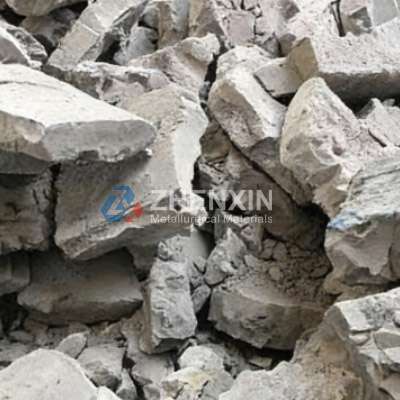
Silicon manganese nitride, also widely known as nitrided silicomanganese, is a high-performance specialized ferroalloy product designed for modern metallurgical and steelmaking production. Its core chemical composition is dominated by silicon nitride (Si3N4) and manganese nitride (Mn5N2), paired with a controlled proportion of non-nitride ferrosilicon, non-nitride silicomanganese, and trace auxiliary components. Unlike ordinary ferroalloys, the granular form of this product presents a stable off-white appearance, with uniform texture and consistent physical properties that support stable dosing in steelmaking processes.
As a premium nitrogen-increasing alloy additive, it fills the gap left by traditional low-efficiency nitride products in the steel industry. With the continuous upgrading of global high-quality steel production standards, silicon manganese nitride has become an indispensable raw material for silicon-oriented steel, high-strength structural steel, stainless steel, and high-performance cast steel production, thanks to its high nitrogen content and stable decomposition performance in molten steel.
2025-2026 Industry Latest Trends & Market Dynamics
In recent years, the global ferroalloy industry has ushered in structural adjustments, and the silicon manganese nitride sector has shown robust development momentum amid raw material cost fluctuations and steel industry upgrading. From 2025 to early 2026, the industry has focused on two core directions: green production process optimization and high-purity product upgrading, responding to the global steel industry’s demand for low-cost, high-efficiency microalloying solutions.
Market data shows that downstream high-strength rebar (especially HRB400 and higher grades) and silicon-oriented steel production have boosted demand for high-nitrogen silicomanganese products. Meanwhile, raw material supply trends (including manganese ore and silicon raw materials) have driven manufacturers to optimize production processes to control costs, and one-step atmospheric synthesis and energy-saving sintering processes have gradually become mainstream, replacing traditional high-energy-consumption preparation methods. The industry is also accelerating the research of nitrogen yield enhancement technology, aiming to further improve the utilization rate of alloy elements and reduce the comprehensive production cost of steel mills.
Product Specifications & Customization Options
Silicon manganese nitride is supplied in multiple customizable forms to meet different steelmaking equipment and process requirements, with flexible size and shape options to adapt to converter, electric furnace, and continuous casting production lines. The standard specifications cover three common size ranges and three physical forms, and customized processing can be provided according to customer-specific production parameters.
Size Range: 10-100MM, 10-50MM, 1-10MM
Physical Shape: lump, briquette, powder
Custom Service: Tailored size, shape, and component ratio available per customer production process requirements
Chemical Composition Specification Table (WordPress Standard Format, Anti-Dislocation)
| Grade | | | N (%) | C (%) | S (%) | P (%) | Fe |
| Nitrided Silicon Manganese I | 40~45 | 20~26 | 16~21 | ≤2.0 | ≤0.04 | ≤0.04 | Remainder |
| Nitrided Silicon Manganese II | ≤10 | 42~48 | 24~27 | ≤1.5 | ≤0.02 | ≤0.1 | Remainder |
| Nitrided Silicon Manganese III | ≤15 | 38~45 | 25~30 | ≤0.8 | ≤0.02 | ≤0.1 | Remainder |
Main Preparation Methods & Process Optimization
At present, the industrial production of silicon manganese nitride mainly adopts five mature preparation processes, each with its own applicable scenarios and improvement space. The mainstream processes include vacuum sintering, secondary nitriding, microwave synthesis, high-temperature self-propagating synthesis, and atmospheric one-step synthesis. Among them, atmospheric one-step synthesis has gradually become the preferred process for large-scale industrial production in 2025-2026 due to its low energy consumption and short production cycle.
The industry is continuously optimizing existing processes, focusing on three core directions: simplifying operation procedures to reduce manual intervention errors, shortening reaction time to improve production efficiency, and reducing raw material and energy consumption to lower overall production costs. R&D teams are also exploring composite process routes to further enhance product density and nitrogen content stability, making the product more adaptable to high-end steelmaking needs.
Core Applications & Competitive Advantages in Steelmaking
Nitrogen microalloying technology has become a key means to improve steel performance and reduce production costs in modern metallurgy. Adding a reasonable amount of nitrogen can maximize the effect of microalloying elements, reduce the dosage of expensive microalloys, and significantly cut steelmaking costs. Before the large-scale application of silicon manganese nitride, traditional nitride additives had obvious limitations in industrial application.
For example, vanadium nitride is limited by scarce raw material resources and high production costs; niobium nitride requires higher rolling temperature, which is difficult to meet for most traditional rolling equipment; manganese nitride and chromium nitride have low nitrogen content (≤6%) and limited application value; titanium nitride has active chemical properties, difficult process control, and low molten steel yield. Silicon manganese nitride perfectly overcomes these shortcomings, becoming a high-efficiency, low-cost ideal steel additive.
Manganese in silicon manganese nitride plays multiple roles in steelmaking: deoxidation, desulfurization, and alloying, eliminating hot brittleness caused by sulfur, improving steel hot workability, refining pearlite grains, enhancing pearlitic steel strength, and improving steel hardenability. Silicon nitride brings excellent high-temperature thermal stability, thermal shock resistance, chemical stability, and good insulation and rigidity. The synergistic effect of silicon, manganese, and nitrogen makes the alloy have comprehensive performance far exceeding single nitride products.
In practical production, the microalloying scheme of HRB400 high-strength rebar using FeV50 combined with silicon manganese nitride has the lowest strengthening cost, which is widely recognized by the steel industry. The product is also widely used in silicon-oriented steel production, with stable performance and significant cost-saving effects, and its market demand continues to rise.
Key Product Features
High Nitrogen Recovery Rate: Manganese nitride components decompose quickly in molten steel, are easily absorbed by steel, with small nitrogen content fluctuation and stable element yield
High Density: Compact product structure, easy storage and transportation, no dust pollution, suitable for automatic dosing system
Excellent Solid Solution Strengthening: Effectively enhance steel solid solution strengthening performance, improve steel strength and toughness
Cost Reduction Effect: Reduce the dosage of precious microalloying elements, lower comprehensive steelmaking production costs
Stable Physical and Chemical Properties: Good rapid heat resistance, thermal conductivity, low thermal expansion coefficient, and strong chemical stability