
What Is Silicon Manganese?
Silicon Manganese (SiMn) is a ferroalloy mainly containing manganese and silicon. As a common alloy additive in steelmaking, SiMn supplies both elements through one addition and supports control of molten steel chemistry.
Manganese contributes to steel strength and hardenability, while silicon is widely used as a deoxidizing element. The combination makes Silicon Manganese alloy suitable for steel grades where controlled Mn and Si additions are required.
SiMn is generally produced through high-temperature submerged arc furnace smelting. After smelting, the alloy is cast, crushed and screened into commercial sizes according to customer requirements.
For buyers, the most important point is that SiMn is not a single fixed specification. Different Mn-Si ratios, impurity limits and particle sizes are available for different steelmaking requirements.
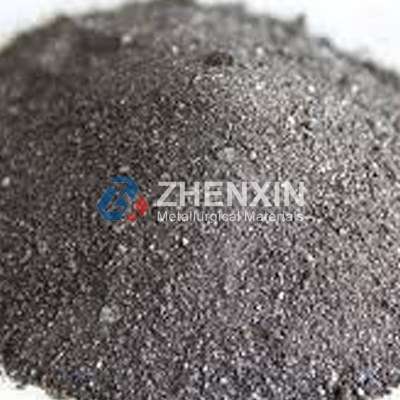
Common Silicon Manganese Grades and Specifications
The most common way to identify a Silicon Manganese grade is through the manganese and silicon content. Carbon, phosphorus and sulfur limits also need to be confirmed when selecting material for a specific steel grade.
Some commonly traded grades include:
| Grade | Mn (%) | Si (%) | C (%) |
| FeMn64Si27 | 60-67 | 25-28 | ≤0.5 |
| FeMn68Si22 | 65-72 | 20-23 | ≤1.2 |
| FeMn68Si18 | 65-72 | 17-20 | ≤1.8 |
| FeMn68Si16 | 65-72 | 14-17 | ≤2.5 |
The grade should match the required Mn and Si levels of the finished steel. C, P and S limits should also be confirmed according to the steel grade.
Common SiMn sizes include 10–50 mm and 10–60 mm, with customized sizes available. For quotation, buyers only need to provide the grade, size, quantity, packing and destination.
Applications of Silicon Manganese
The main application of Silicon Manganese is steelmaking, where SiMn serves as both an alloying material and a deoxidizer.
During molten steel treatment, SiMn introduces manganese and silicon while supporting oxygen control. The addition amount is calculated according to the initial steel chemistry, target composition and expected alloy recovery.
Manganese is widely used to improve strength and hardenability and to help control the influence of sulfur during steel production. Silicon contributes to deoxidation and can also affect the mechanical properties of the finished steel.
SiMn is commonly used in carbon steel, structural steel, low-alloy steel, rail steel and other manganese-containing steel grades. The suitable grade depends on the chemistry and production route of the finished steel.
SiMn can also be used in selected metallurgical and alloy-production processes where controlled manganese and silicon additions are required.
For industrial buyers, the key consideration is matching the SiMn grade and addition level with the actual steelmaking process rather than selecting a grade based only on nominal Mn content.
How to Choose a Silicon Manganese Supplier
When choosing a Silicon Manganese supplier, focus on manufacturing capability, quality consistency and supply reliability. A direct manufacturer should have stable production, controlled processing and the ability to meet required Mn, Si, C, P and S specifications.
For regular procurement, check batch consistency, particle size, production capacity and quality documentation such as COA or test reports. Export experience and delivery capability are also important for bulk and long-term orders.
When requesting a quotation, provide the SiMn grade, chemical requirements, size, quantity, packing and destination. A qualified manufacturer can then confirm the suitable specification, availability and factory quotation more efficiently.