
Silicon Carbide (SiC), also known as emery or refractory sand, is a widely used inorganic non-metallic material. Because natural silicon carbide is extremely rare in nature, almost all silicon carbide used in industry is artificially synthesized. According to different production processes and components, industrial silicon carbide is mainly divided into two categories: black silicon carbide and green silicon carbide. They are widely used in abrasives, refractories, metallurgical deoxidation, semiconductor devices and other fields.
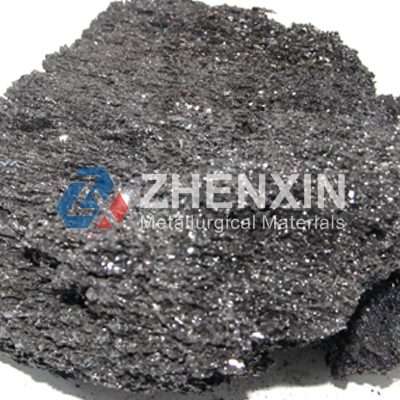
The quality of industrial silicon carbide is mainly determined by its chemical composition. The content of SiC is the core index, together with trace amounts of carbon (C) and ferric oxide (Fe₂O₃). The composition standards vary for different particle sizes, as shown in the table below.
| Particle Size Range | SiC(%) | C(%) | Fe₂O₃(%) |
| 12#–19# | 98.5 | 0.2 | 0.6 |
| 20#–90# | 99.0 | 0.2 | 0.2 |
| 80#–100# | 98.5 | 0.25 | 0.2 |
| 100#–180# | 98.0 | 0.3 | 0.8 |
| 220#–240# | 97.5 | 0.25 | 0.7 |
| W63–W20 | 97.0 | 0.3 | 0.7 |
| W14–W10 | 95.5 | 0.3 | 0.7 |
| W7–W5 | 94.0 | 0.3 | 0.7 |
Black silicon carbide is synthesized from quartz sand and petroleum coke through reduction reaction in a high-temperature resistance furnace. Its Mohs hardness is 9.2–9.5, microhardness is about 3300 kg/cm³, and SiC content is usually above 95%. Black silicon carbide features high toughness, high strength, excellent wear resistance and thermal stability, as well as good thermal conductivity and low thermal expansion coefficient. It is mainly used for processing low tensile strength materials such as cast iron, glass, ceramics, stone, refractories and non-ferrous metals.
Green silicon carbide is a non-metallic mineral produced by the reaction of quartz sand, petroleum coke and sodium chloride at temperatures above 2000℃. It appears as green transparent crystals with microhardness between 3280–3400 kg/cm³. With higher purity and greater brittleness, it is more suitable for high-precision grinding. Green silicon carbide is widely used in grinding and polishing cemented carbide, titanium alloy, high-speed steel and other precision materials, as well as high-end bonded and coated abrasives.
The industrial production of silicon carbide uses quartz and petroleum coke as basic raw materials. After crushing, batching and mixing, the materials are put into a special resistance furnace for high-temperature smelting. During smelting, the furnace core temperature can reach 2500℃–2700℃, and the charge starts to react above 1450℃ to form SiC and release carbon monoxide. Salt is added as an additive to produce green silicon carbide, while wood chips can improve the air permeability of the charge for a more uniform reaction. The produced silicon carbide blocks are then processed into granules, fine powder and micro-powder through crushing, classification, washing and sieving.
In the iron and steel industry, silicon carbide is an efficient deoxidizer and carburizer. It can increase silicon and carbon content, and provide stable deoxidation. With high specific gravity, it easily enters molten steel with reliable effect. High-quality silicon carbide for steelmaking features low dust, low phosphorus and low sulfur, which effectively improves steel purity and performance, so it is widely used in high-quality and special steel production.
From 2025 to 2026, the global silicon carbide industry is experiencing a new round of rapid growth. Driven by new energy vehicles, photovoltaic inverters, energy storage systems and high-power power supplies, demand for automotive and industrial SiC devices keeps rising. Breakthroughs in large-size SiC substrates and 8-inch+ wafer mass production have effectively reduced device costs. Meanwhile, applications in high-frequency communication, laser devices, AR/VR optical components and other emerging fields are expanding rapidly, pushing the industry toward high-end, refined and high-value-added development.
In the coming years, silicon carbide will continue to serve as a key material for third-generation semiconductors and high-end industrial abrasives, with a fast-growing market. With continuous optimization of production processes and improved industrial chains, silicon carbide will be more widely used in new energy, high-end manufacturing, electronic information and other industries, becoming an important basic material for industrial upgrading and energy transformation.