
According to what we know, silicon-calcium alloy is mainly composed of silicon and calcium elements, but the chemical properties of calcium elements are relatively active, so in transportation and storage, we need to pay special attention to the storage environment of silicon-calcium alloy.
Reactivity with water
The calcium (Ca) content in silicon-calcium is usually 20%-35%. Calcium is an active metal and reacts violently with water (including water vapor in the air) to produce calcium hydroxide (Ca (OH)₂) and release hydrogen (H₂).
Ca+2H2O=Ca(OH)2+H2↑
Hydrogen is flammable and explosive (explosion limit 4%-75%). If it accumulates in a confined space, it may cause an explosion when it encounters a fire source.
Oxidizability and corrosiveness
Calcium is easily oxidized in the air to produce calcium oxide (CaO). Calcium oxide reacts with water to produce calcium hydroxide (strong alkali), which can cause corrosion (such as burns) when in contact with skin or mucous membranes; at the same time, the exothermic reaction may increase the risk of hydrogen combustion.
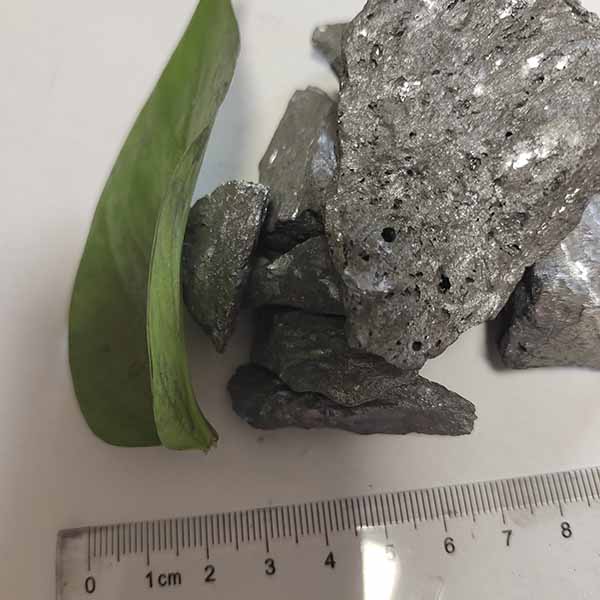
Therefore, in the land transportation, sea transportation and warehouse production and storage of silicon calcium, we need to pay special attention to the storage environment
Storage environment requirements
Dry and ventilated: The warehouse humidity must be controlled below 60%, avoid open-air storage (close doors and windows on rainy and foggy days), and can be equipped with a dehumidifier or quicklime to absorb moisture.
Low temperature and light avoidance: avoid direct sunlight or proximity to heat sources (such as heaters, ovens), and the ambient temperature does not exceed 35℃ (high temperature will accelerate oxidation reactions).
Isolated storage: Store separately from water, acids (such as hydrochloric acid, sulfuric acid), and wet materials (such as coke, slag), with a distance of ≥1 meter to prevent indirect moisture absorption or chemical reactions.
Stacking method
Storage off the ground: Use pallets or wooden racks to raise the height (≥10cm) to prevent moisture erosion from the ground;
Stacking height: Iron barrels should not be stacked more than 3 layers, and woven bags should not be stacked more than 5 layers to avoid the bottom layer from being compressed and damaged.
Handling specifications: Load and unload gently, and do not throw or hit (especially for fine powder packaging to prevent powder leakage); the forks must be fixed when transporting by forklift to avoid tilting and causing the packaging to break.
Storage period and inspection
Shelf life: When the seal is intact, the shelf life is usually 3-6 months (depending on the ambient humidity); after opening, it must be used up within 24 hours, and the unused part must be resealed (such as clamping the plastic bag with a sealing clip).
Regular inspection: Check the packaging for damage and powdering or agglomeration on the surface every week. If any problems are found, isolate and handle them immediately (such as transferring damaged parts to sealed containers and scrapping those with severe powdering).