
Nitrided ferro manganese is a high-value ferroalloy product manufactured by introducing nitrogen into medium and low-carbon ferro manganese through professional nitriding processes. Unlike traditional ferroalloy materials, it serves a dual role as both a nitrogen additive and a manganese additive, playing an irreplaceable role in the production of high-hardness alloy steel, stainless steel, and heat-resistant steel. These high-performance steels are further applied in key industries such as automotive manufacturing, shipbuilding, and aerospace, providing core material support for the development of high-end equipment.
In recent years, the nitrided ferro manganese industry has witnessed significant development driven by policy guidance, technological innovation, and growing downstream demand. According to the latest industry data released in early 2026, the global market size of nitrided ferro manganese is expected to grow at a compound annual growth rate of 10.4% from 2024 to 2030, with emerging applications in new energy vehicles and electronic materials becoming new growth drivers. In 2025, the implementation of the “Trial Technical Specification for Key Strategic Metal Nitrides” has standardized the product classification and quality requirements of nitrided ferro manganese, promoting the industry to shift from extensive growth to refined development.
Additionally, a groundbreaking development in the global magnetic material field in 2026 has brought new opportunities for the nitrided ferro manganese industry. The upcoming large-scale production of rare-earth-free nitrided iron permanent magnets, which rely on iron and nitrogen as core raw materials, is expected to drive the demand for high-purity nitrided ferro manganese, as it can effectively improve the magnetic properties and stability of such magnets. This new application scenario is expected to further expand the market space of nitrided ferro manganese beyond the traditional metallurgical field.
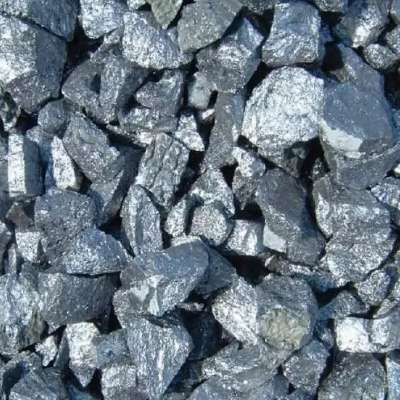
Features of Nitrided Ferro Manganese
The unique production process endows nitrided ferro manganese with outstanding performance advantages, making it favored by downstream steelmaking enterprises:
High nitrogen utilization rate, which can efficiently transfer nitrogen elements to the steelmaking system, reducing the loss of nitrogen in the production process and improving the utilization efficiency of raw materials.
High content of nitrogen and manganese, which can quickly meet the alloying requirements of steel, shorten the smelting cycle, and improve production efficiency.
Low content of harmful impurities such as sulfur and phosphorus, which can avoid adverse effects on the mechanical properties and corrosion resistance of steel, ensuring the quality of finished steel products.
Different Forms of Nitrided Ferro Manganese
To adapt to different steelmaking processes and application scenarios, nitrided ferro manganese is supplied in multiple forms, each with its own characteristics and applicable fields:
Nitrided manganese powder: With fine particle size and large specific surface area, it has fast reaction speed in the steelmaking process, suitable for small and medium-sized steelmaking furnaces and precise alloying requirements.
Nitrided ferromanganese briquettes: Pressed from nitrided manganese powder, it has high density and good fluidity, which can avoid dust pollution during transportation and use, and is suitable for large-scale continuous steelmaking production.
Nitrided manganese cored wire: Wrapped with steel strip, it can be accurately added to the molten steel, realizing precise control of nitrogen and manganese content, and is widely used in the production of high-grade alloy steel and stainless steel.
Applications of Nitrided Ferro Manganese
As an essential alloying agent in the metallurgical industry, nitrided ferro manganese has a wide range of applications, covering multiple fields such as metallurgy, new energy, and aerospace:
It is a core raw material for the production of special alloy steel, stainless steel, and heat-resistant steel, providing important support for the manufacturing of high-strength, corrosion-resistant, and high-temperature-resistant mechanical parts and equipment.
It can effectively improve the mechanical properties of steel, including hardness, toughness, and wear resistance, while refining the grain structure of steel and expanding the austenite zone, enhancing the comprehensive performance of steel products.
It can replace expensive nickel elements in the steelmaking process, significantly reducing the production cost of steel enterprises without affecting the quality of steel, which is of great significance for reducing the cost pressure of downstream industries.
In recent years, it has also been gradually applied in new energy fields such as solid-state batteries and hydrogen energy, as a doping agent or catalyst, promoting the performance improvement of new energy products.
Chemical Composition of Nitrided Ferro Manganese
The chemical composition of nitrided ferro manganese is strictly controlled to meet the different requirements of downstream applications. The following is the standard chemical composition of common models (all data are in mass fraction, %):
| Model | Mn (min) | C | Si (max) | S (max) | P (max) | N |
| FeMn80N | 80.0 | 0.1-0.5 | 2 | 0.03 | 0.15 | 1.5-2.5 |
| FeMn70N | 70.0 | 0.1-0.5 | 2 | 0.03 | 0.30 | 4-8 |
| FeMn70N | 70.0 | 0.5-2.0 | 2 | 0.03 | 0.35 | 4-8 |
Preparation of Nitrided Ferro Manganese
At present, there are two main industrial preparation methods for nitrided ferro manganese, namely liquid-phase nitriding and solid-phase nitriding, each with its own advantages and application scope:
Liquid-phase nitriding: This method prepares nitrided ferro manganese by introducing nitrogen into molten medium and low-carbon ferro manganese. The product prepared by this method has the characteristics of high density and high strength, and the nitrogen utilization rate in the steelmaking process is relatively high. However, due to the limitation of the process, the nitrogen content of the product is relatively low, only about 2%, which cannot meet the alloying requirements of high-grade steel, so it is less used in industrial production at present.
Solid-phase nitriding: As the most widely used method in the current industrial production of nitrided ferro manganese, it has the advantages of flexible process, controllable product composition, and high nitrogen content. The specific production process is as follows:
Select high-quality medium and low-carbon ferro manganese as the raw material to ensure the purity of the final product and reduce the content of impurities.
Crush and sieve the selected ferro manganese raw materials to obtain 80-100 mesh ferro manganese powder, which increases the contact area between the raw materials and nitrogen and improves the nitriding efficiency.
According to the requirements of the nitriding process and downstream applications, the ferro manganese powder can be used directly or pressed into blocks to adapt to different nitriding equipment and production scenarios.
Put the ferro manganese powder or block into a vacuum nitriding furnace, control the furnace temperature at 900-1100℃ and the pressure at 0.1MPa, and carry out nitriding reaction for 8-12 hours to ensure that the nitrogen fully combines with manganese.
After the nitriding reaction is completed, the product is naturally cooled to room temperature to avoid the damage of the product structure caused by rapid cooling.
After cooling, the product is inspected, packaged, and delivered to ensure that the product quality meets the standard requirements.