
High carbon silicon, commonly referred to as silicon carbon alloy, is an innovative composite alloy that plays a crucial role in the deoxidation process of converter smelting within the iron and steel industry. Unlike traditional alloys, it features a unique composition dominated by silicon and carbon, with silicon content typically exceeding 55% and carbon content above 15%. Trace components include silicon dioxide, phosphorus, and sulfur, which have minimal impact on its core performance.
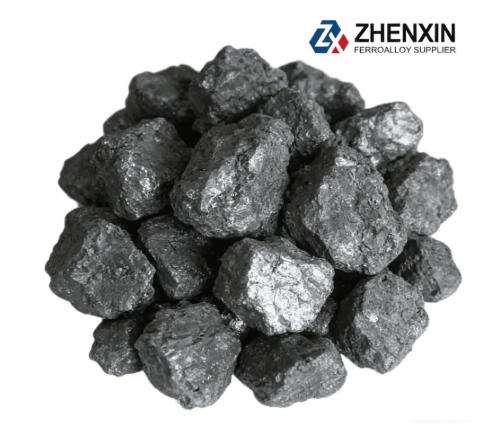
High carbon silicon is not produced independently but is a by-product during the metallic silicon manufacturing process. In the electric furnace smelting of metallic silicon, uneven electrode distribution in some furnaces may lead to uneven heating of raw materials. This results in a small amount of silica at the furnace bottom that fails to fully react with carbon and other raw materials. Under long-term high-temperature conditions, these unreacted materials accumulate and form lump-shaped products, which are high carbon silicon.
The following table details the standard chemical composition and particle size specifications of high carbon silicon, designed to fit WordPress basic format to avoid display distortion:
| High Carbon Silicon Grade | Si (%) ≥ | C (%) ≥ | Al (%) ≤ | S (%) ≤ | P (%) ≤ | Size (mm) |
| Si68C18 | 68 | 18 | 3 | 0.1 | 0.05 | 5-25 |
| Si65C15 | 65 | 15 | 3 | 0.1 | 0.05 | 10-50 |
| Si60C10 | 60 | 10 | 3 | 0.1 | 0.05 | 10-100 |
As a new type of composite alloy deoxidizer, high carbon silicon boasts significant advantages over traditional alternatives such as ferrosilicon powder, calcium carbide, carbon powder, and alloy powder. Its most prominent edge is cost-effectiveness, making it a preferred choice for steel enterprises seeking to reduce production costs. Additionally, it has stable physical and chemical properties and excellent deoxidation performance. When applied in converter steelmaking, it can rapidly react with oxygen in molten steel to form slag that floats on the surface, effectively achieving deoxidation. Notably, it also exhibits certain desulfurization and recarburization effects during the deoxidation process, which can replace part of the recarburizer and further lower steelmaking costs.
In the smelting of ordinary steel, alloy steel, and special steel, high carbon silicon demonstrates remarkable advantages in deoxidation. It can replace ferrosilicon, silicon carbide, and recarburizers, thereby reducing the dosage of deoxidizers and stabilizing the chemical composition of finished steel. Moreover, its use can effectively shorten the reduction time, reduce power consumption during production, and improve steelmaking efficiency. The decomposition and oxidation of high carbon silicon in the converter generate a large amount of heat, which increases the furnace temperature and pressure, providing essential conditions for efficient deoxidation and desulfurization.
High carbon silicon also delivers obvious benefits in foundry applications, particularly for cast iron production. Cast iron generally contains 2~4% carbon and 1~3% silicon, and these two elements directly influence the microstructure and performance of cast iron. With carbon and silicon as its main components, high carbon silicon can serve as a deoxidizer, high-efficiency heating agent (Si: 6.58kcal/g, C: 1.24kcal/g), and recarburizer in the iron casting process. This not only effectively controls the input of other impurities but also minimizes the generation of harmful substances, ensuring the quality of cast iron products.
Recent industry news shows that 2026 has become a critical year for the development of the high carbon silicon industry, driven by the global steel industry’s transformation towards energy conservation and emission reduction. As the global economy recovers, the production capacity of the steel industry continues to expand, and the demand for high-efficiency, cost-effective deoxidizers like high carbon silicon is growing year by year. Meanwhile, with the continuous advancement of smelting technology, the production process of high carbon silicon is being optimized, leading to improved product quality and reduced production costs. Industry insiders predict that the global high carbon silicon market will maintain a steady growth trend in the next 3-5 years, with increasing application scenarios in emerging fields such as new energy equipment manufacturing.
The market prospects of high carbon silicon are closely linked to the development of the steel industry. For a long time, traditional alloys have been plagued by unstable recovery rates due to the impact of converter operation factors, leading to fluctuations in the chemical composition of finished steel and low pass rates of internal control indicators. High carbon silicon, with its unique advantages, perfectly addresses these inherent problems in the steel industry. With the continuous increase in global steel production capacity and the deepening of industrial upgrading, the market demand for high carbon silicon will continue to rise steadily. Currently, high carbon silicon has not yet been fully popularized globally, and there is enormous room for market expansion in the future.
As an emerging alloy product, high carbon silicon is gradually gaining recognition in the metallurgical industry. Its production capacity is mainly concentrated in specific regions of major steel-producing countries, and with the continuous improvement of production technology and the expansion of application scenarios, it is expected to become a core deoxidizer in the global steel industry in the near future.