
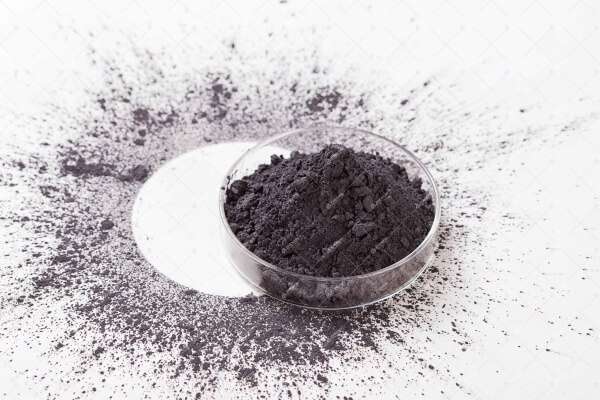
Metal silicon powder (Si≥98.5%) is a micron-sized powder made from high-purity silicon blocks through crushing, ball milling, grading and other processes, and the particle size is usually between 1-100μm. Its core advantages are:
High purity characteristics: The purity of electronic-grade silicon powder can reach 99.9999%, providing basic raw materials for the semiconductor industry.
Active surface: The specific surface area is 5-20m²/g, and the chemical reaction activity is significantly better than that of bulk silicon.
Thermal stability: The melting point is 1414℃, and the performance remains stable under high temperature environment.
Four golden application areas of metal silicon powder:
As the core raw material of solar cells, each cell consumes about 4g of silicon powder. N-type monocrystalline silicon wafers have particularly strict requirements on the purity of silicon powder, and the impurity content must be controlled at the ppb level.
In chip manufacturing, silicon powder is generated into monocrystalline silicon rods through the CVD process, and finally processed into wafers. The oxygen content of electronic-grade silicon powder required for 7nm process chips is less than 0.1ppm.
- Silicon-carbon composite materials: improve the negative electrode capacity of lithium batteries (theoretical specific capacity 4200mAh/g)
- Special ceramics: Silicon nitride ceramic bearing life increased by 3-5 times
- Aerospace coatings: High temperature resistant coatings can withstand extreme environments of 1600℃
In the metallurgical industry, as a deoxidizer, it can reduce the oxygen content of molten steel to below 0.002%; adding 2% silicon powder to aluminum alloy can increase fluidity by 20%.

Application of metal silicon powder in the new energy vehicle industry:
Aluminum alloy strengthening: adding 3%-15% silicon powder (particle size 200-325 mesh), Tesla Model Y parts achieve 20% weight reduction, tensile strength exceeds 400MPa.
Thermal management system: Thermally conductive fillers prepared with 5N grade silicon powder (thermal conductivity ≥50W/(m·K)) are used for battery pack heat dissipation to solve the problem of increased contact thermal resistance under high temperature conditions.
Future market prospects and challenges of metal silicon powder
Growth driver: The global silicon powder market scale has an average annual growth rate of more than 8%, and China accounts for 93% of the production capacity (2023 data).
Core challenge:
The cost of preparing high-purity silicon powder remains high (9N grade purity requires 0.01ppb impurity control).
The volume effect of silicon anode still requires nano-coating/porous structure optimization.
Industry consensus: With the increase in the penetration rate of electric vehicles and breakthroughs in solid-state battery technology, metal silicon powder will become the “invisible engine” for the upgrading of the new energy industry.