
Ferrochrome Nitride: Premium Alloy for Nitrogen-Containing Steel Production
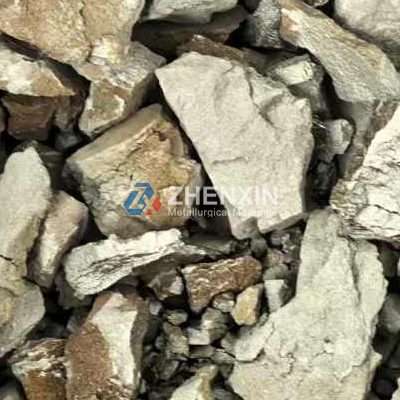
Ferrochrome nitride, alternatively termed nitrided ferrochrome or chrome nitride ferroalloy, is a key ferroalloy composed primarily of chromium nitrides (CrN, Cr₂N), iron nitride (Fe₄N), and composite nitrides of chromium and iron [(Cr, Fe)₂N₍₁₋ₓ₎]. The phase composition of this alloy is mainly determined by two core factors: the nitriding medium employed and the nitriding temperature during production. As a critical raw material, ferrochrome nitride is widely utilized in manufacturing special nitrogen-containing steels, particularly those with excellent corrosion resistance and high-performance characteristics.
Ferrochrome Nitride Supplier & Product Highlights
Zhenxin is a professional ferrochrome nitride manufacturer and supplier, committed to providing high-quality nitrided ferrochrome products for global steelmaking enterprises. Our ferrochrome nitride boasts outstanding performance advantages that meet the strict requirements of modern special steel production:
- Stable nitrogen content: Ensures consistent alloying effect in steel smelting
- High bulk density: Facilitates uniform addition and melting in furnaces
- Excellent alloy absorption rate: Maximizes material utilization and reduces waste
- Melting point: Approximately 700°C, compatible with mainstream steelmaking processes
- Cost-saving advantage: Can partially substitute nickel, significantly reducing steel production costs
For quality assurance, we provide SGS test reports for all our nitrided ferrochrome products. Click here to obtain the SGS test report.
Chemical Composition of Ferrochrome Nitride
The chemical composition of our ferrochrome nitride strictly complies with industry standards, and we also offer customized specifications based on customer requirements. The standard and alternative chemical compositions are detailed in the following tables:
Standard Chemical Composition
| Chemical Formula | Cr (Min) | N (Min) | C (Max) | Si (Max) | P (Max) | S (Max) |
| FeNCr3-A | 60% | 3.0% | 0.03% | 1.5% | 0.03% | 0.04% |
| FeNCr3-B | 60% | 5.0% | 0.03% | 2.5% | 0.03% | 0.04% |
| FeNCr6-A | 60% | 3.0% | 0.06% | 1.5% | 0.03% | 0.04% |
| FeNCr6-B | 60% | 5.0% | 0.06% | 2.5% | 0.03% | 0.04% |
| FeNCr10-A | 60% | 3.0% | 0.10% | 1.5% | 0.03% | 0.04% |
| FeNCr10-B | 60% | 5.0% | 0.10% | 2.5% | 0.03% | 0.04% |
Alternative Chemical Composition (Customized Specifications)
- Cr: 60-65% min, N: 8-10%, C: 0.1% max, Si: 1.5-2.5% max, P: 0.03% max, S: 0.04% max
- Cr: 60-65% min, N: 8-10%, C: 0.06% max, Si: 1.5-2.5% max, P: 0.03% max, S: 0.04% max
- Cr: 60-65% min, N: 8-10%, C: 0.03% max, Si: 1.0% max, P: 0.03% max, S: 0.04% max
Applications of Ferrochrome Nitride in Steelmaking
Ferrochrome nitride is extensively used in electric furnace and oxygen converter steelmaking processes, serving as a core alloying agent for nitrogen-containing special steels. Its application scope covers stainless steel, heat-resistant steel, corrosion-resistant steel, and various alloy steels, playing an irreplaceable role in improving steel performance.
Nitrogen is a key austenite-forming element. In chromium-manganese and chromium-manganese-nickel stainless steels, nitrogen is added to compensate for nickel shortages. Research data indicates that nitrogen’s ability to expand the austenite region is approximately 30 times that of nickel. Therefore, adding nitrogen to nickel-containing austenitic stainless steel production can partially replace precious nickel, bringing significant economic benefits to steel enterprises.
Moreover, nitrogen alloying can enhance steel’s strength and corrosion resistance while maintaining excellent plasticity, making the steel suitable for harsh working environments such as chemical equipment, marine engineering, and high-pressure pipelines. Currently, China and India are the world’s largest producers of nitrogen-containing corrosion-resistant steel, with output accounting for 10% of global total steel production and 20% of Asia’s total steel production. To meet the growing global demand, Zhenxin provides a full range of nitride alloy products, including silicon nitride, ferrosilicon nitride, ferrochrome nitride, and silicomanganese nitride.
Production & Delivery Standards of Ferrochrome Nitride
Production Standards
- Sampling and sample preparation follow ferrochrome industry standards.
- Class A products are applicable to nitrided remelted products, and their nitrogen content does not include adsorbed nitrogen.
- Class B products are suitable for solid nitrided alloys.
- The contents of chromium, nitrogen, phosphorus, carbon, and sulfur must be tested for each furnace batch.
- Class B products with silicon content not exceeding 3.0% can be supplied through supplier-buyer negotiation.
- Special chemical composition requirements can be customized through negotiation between both parties.
Delivery Standards
- Natural properties: Delivered in blocks, each block weighing no more than 5kg. The proportion of high-nitrogen ferrochrome blocks smaller than 10mm×10mm shall not exceed 10% of the total weight.
- Physical condition: No obvious non-metallic inclusions on the surface or inside; no obvious molten state on the surface and inside of solid nitrided alloys.
- Packaging: Bulk packaging or ton bag packaging is available according to buyer requirements.
- Special terms: Customized requirements can be negotiated with the supplier.
Preparation Technology of Nitrided Low-Carbon Ferrochrome
In China, the standard nitrogen content of ferrochrome nitride products ranges from 3.0% to 5.0%. The mainstream production process for nitrided low-carbon ferrochrome in nitrogen-containing steel production is solid nitriding using a vacuum resistance furnace.
Solid-phase nitriding uses nitrogen or ammonia as the nitriding raw material, with the nitriding reaction occurring in a vacuum induction furnace or resistance furnace. This process is usually combined with vacuum smelting of ferrochrome: after vacuum decarburization is completed, nitrogen is introduced into the furnace for nitriding treatment. Ferrochrome nitride produced by this method has high porosity. Although remelting can densify the alloy, the nitrogen content will decrease by 2% to 2.5% during the remelting stage.
Another practical preparation method is self-propagating high-temperature synthesis (SHS), which is an alternative to vacuum heating for producing high-purity, high-strength, and corrosion-resistant ferrochrome nitride. The core advantage of SHS is utilizing the high heat generated by inter-element chemical reactions to synthesize high-melting, high-performance materials in a short time. This technology integrates material synthesis and sintering: during the SHS reaction, a combustion structure is formed, and the macro-dynamics of the structure connects the combustion process and structure formation process.
The self-propagating high-temperature combustion process consists of four stages:
- Rapid expansion stage of the combustion reaction zone
- Steady-state combustion stage
- Decelerated synthesis stage
- Post-combustion stage after the combustion wave passes