
Ferro manganese is a ferroalloy composed of iron and manganese, which is one of the most widely used alloy materials in the metallurgical industry. Manganese has a density of 7.43g/cm³, melting point of 1245℃, boiling point of 2150℃. It is chemically active and can quickly combine with oxygen, sulfur and other elements, so it plays an irreplaceable role in steelmaking.
In 2026, the global steel industry continues to transform towards high-end and green development. As a key furnace material, ferro manganese maintains steady growth in demand. The supply of international manganese ore has staged adjustments, and production and logistics costs in major producing areas have risen, driving the ferroalloy market to perform steadily. Domestic ferroalloy industry continues to promote energy-saving and low-carbon transformation, the proportion of large closed submerged arc furnaces is increasing, and product purity and stability are further improved to better meet the production needs of high-end steel and special steel.
According to different carbon content, ferro manganese is mainly divided into three categories to adapt to different smelting scenarios: High carbon ferro manganese, medium carbon ferro manganese, low carbon ferro manganese.
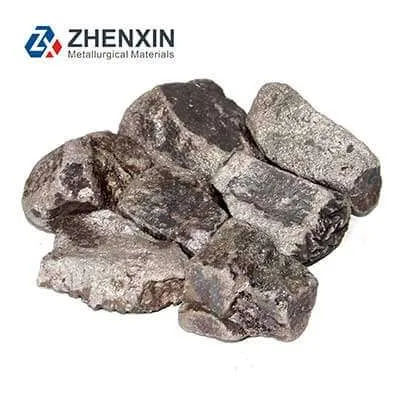

The chemical composition standards of different ferro manganese grades are as follows:
| Grade | Mn | C ≤ | Si ≤ | P ≤ | S ≤ |
| FeMn88C0.2 | 85.0-92.0 | 0.2 | 2.0 | 0.3 | 0.02 |
| FeMn84C0.4 | 80.0-87.0 | 0.4 | 2.0 | 0.3 | 0.02 |
| FeMn84C0.7 | 80.0-87.0 | 0.7 | 2.0 | 0.3 | 0.02 |
| FeMn82C1.0 | 78.0-85.0 | 1.0 | 2.5 | 0.35 | 0.03 |
| FeMn82C1.5 | 78.0-85.0 | 1.5 | 2.5 | 0.35 | 0.03 |
| FeMn78C2.0 | 75.0-82.0 | 2.0 | 2.5 | 0.40 | 0.03 |
| FeMn78C8.0 | 70.0-82.0 | 8.0 | 2.5 | 0.33 | 0.03 |
| FeMn74C7.5 | 70.0-77.0 | 7.5 | 3.0 | 0.38 | 0.03 |
| FeMn68C7.0 | 65.0-72.0 | 7.0 | 4.5 | 0.40 | 0.03 |
The main application field of ferro manganese is the steel industry. In the steelmaking process, as a deoxidizer and desulfurizer, ferro manganese can effectively remove harmful elements in molten steel and improve the strength, toughness and workability of steel. Industry data shows that producing one ton of steel usually requires 3-5kg of ferro manganese.
In the foundry industry, ferro manganese is often used as inoculant and nodulizer for ductile iron. It can promote graphite precipitation, reduce casting defects, lower furnace nozzle blockage, and extend the service life of smelting equipment.
In other fields, high carbon ferro manganese can be used as a reducing agent for low-carbon ferroalloys. Ferro manganese powder can be used in welding materials and mineral processing. High-purity ferro manganese can also be used in electronics, chemical and other industries.
The mainstream production processes of ferro manganese include blast furnace method, electric furnace smelting and oxygen top-blown furnace method. Early carbon ferro manganese was mostly produced by blast furnace. With the development of power industry and the improvement of environmental protection requirements, electric furnace smelting is more and more widely used. Medium and low carbon ferro manganese is mostly obtained by electric furnace desiliconization refining, using silicomanganese alloy, manganese-rich ore and lime as main raw materials to complete reduction reaction at high temperature.
The development of ferro manganese industry in 2026 presents new characteristics: obvious support from raw material costs, increased industry concentration, green and low-carbon production becoming the mainstream direction, and stricter quality standards for export products. Driven by the stable development of the steel industry, high-quality and low-impurity ferro manganese products will be more competitive in the market.