
Why do high-end stainless steel manufacturers only choose low carbon ferrochrome? Low carbon ferrochrome is a kind of ferrochrome, It refers to ferrochrome with a carbon content of 0.15~0.5%. Low carbon ferrochrome usually used in Production of high-end steel,It has the advantages of low carbon content and improved steel purity.
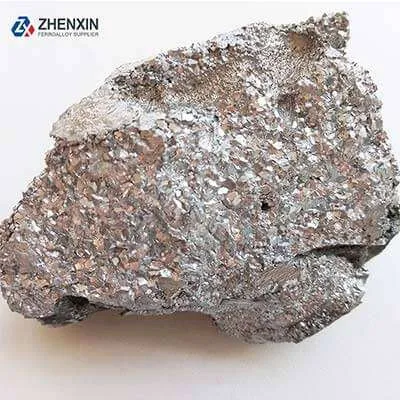
In the field of metal smelting, ferrochrome serves as an important alloy additive with various types. High-end stainless steel manufacturers have a particular preference for low carbon ferrochrome. This choice is based on multiple considerations, including differences in application scenarios due to different carbon contents, the impact of chromium content and impurity control on the performance of end products, and how particle size and packaging meet production requirements. Each of these factors is crucial.
Specification Comparison between Low Carbon FeCr and High Carbon FeCr
| The specifications of ferrochrome | Carbon Content (%) | Chromium Content (%) | Main Impurity Content (%) | Application Scenarios |
| Low-Carbon Ferrochromium | ≤0.5 | 60 – 75 | P≤0.03, S≤0.03 | High-end stainless steel, special steels for aerospace, precision casting |
| High-Carbon Ferrochromium | 4 – 10 | 50 – 65 | P≤0.04, S≤0.04 | Ordinary stainless steel, scenarios with high requirements for hardness but relatively low requirements for corrosion resistance |
It can be clearly seen from the specification comparison that low-carbon ferrochromium has stricter control over carbon content and impurities, which gives it significant advantages in high-end product manufacturing.
Performance of ferrochrome with different carbon contents in applications
The ferrochrome uses in Stainless Steel Field
In the production of stainless steel, the carbon content is a key factor affecting its performance. High-end stainless steel has extremely high requirements for corrosion resistance and toughness.
Due to its low carbon content (generally between 0.15% and 0.5%), low-carbon ferrochromium can effectively prevent the formation of chromium carbide precipitates at the grain boundaries. When the carbon content is too high, such as when using high-carbon ferrochromium (with a carbon content usually between 4% and 10%), during the processing and use of stainless steel, the chromium carbide at the grain boundaries will lead to intergranular corrosion, greatly reducing the corrosion resistance of stainless steel.
High-end stainless steel is commonly used in fields with strict requirements for corrosion resistance, such as food processing equipment and medical devices. Therefore, low-carbon ferrochromium is the top choice. In contrast, high-carbon ferrochromium may be used in the production of ordinary stainless steel, which places more emphasis on hardness and wear resistance but has relatively lower requirements for corrosion resistance. However, it is difficult to meet the needs of high-end product manufacturing.

The ferrochrome uses in Special Steel Field
Special steels often need to possess special properties, such as high-temperature strength and low-temperature toughness. Low-carbon ferrochromium can provide a stable alloying effect for special steels, helping to enhance their comprehensive performance. In high-temperature alloy steels used in the aerospace industry, low-carbon ferrochromium can ensure the stability of the steel’s structure in a high-temperature environment and avoid performance degradation caused by excessive carbon content.
On the other hand, high-carbon ferrochromium may cause performance fluctuations in special steels under specific working conditions, failing to meet the high-precision and high-reliability requirements of special steels.
The ferrochrome uses in Foundry Field
In the foundry process, low-carbon ferrochromium helps to obtain a denser and more uniform casting structure. It can refine the grains and improve the strength and toughness of the casting. For some precision castings, such as key components of automobile engines, using low-carbon ferrochromium can reduce casting defects and improve product quality.
Due to its high carbon content, high-carbon ferrochromium may lead to an excessive amount of carbides in the casting, affecting the mechanical properties and machining performance of the casting. Therefore, in high-end foundry applications, it is less popular than low-carbon ferrochromium.
Therefore, whether it is the special steel industry, stainless steel industry or foundry industry, low carbon ferrochrome is undoubtedly the most cost-effective
Zhenxin’s Micro-Carbon Ferrochromium Using the Vacuum Solid-State Decarburization Method
We can also produce the Micro carbon ferrochrome, and It refers to ferrochrome with a carbon content of 0.06 to 0.15%. Micro-carbon ferrochrome is suitable for the production of ultra-low carbon/nitrogen stainless steel (such as 316L, 304L, 904L, etc.), ensuring high purity of the material. And Zhenxin Metallurgy The low carbon ferrochrome produced is prepared by vacuum solid phase decarburization
The vacuum solid-state decarburization method is an advanced process for producing micro-carbon ferrochromium (which belongs to the category of low-carbon ferrochromium). The specific process is as follows:
- Raw Material Preparation: Select high-quality high-carbon ferrochromium as the initial raw material, which requires high chromium content and low impurities. At the same time, prepare the decarburizing agents, which play a role in promoting carbon removal in subsequent reactions.
- Molding Treatment: Crush the high-carbon ferrochromium into an appropriate particle size and fully mix it with the decarburizing agents in an accurate proportion. Then, through pressing and other methods, the mixed materials are made into block-shaped blanks with a certain shape and strength for subsequent reactions in a vacuum environment.
- Vacuum Decarburization Reaction: Put the blanks into a vacuum furnace and evacuate it to a specific low-pressure environment. Under high-temperature conditions, the decarburizing agents react chemically with the carbon in the high-carbon ferrochromium. The generated carbon dioxide gas is quickly discharged from the system in a vacuum environment, thus reducing the carbon content.
- Cooling and Crushing: After a certain period of reaction, when the carbon content drops to the target range (i.e., the carbon content standard of micro-carbon ferrochromium), stop heating and let the materials in the furnace cool slowly. The cooled block products are processed through crushing, screening, etc., to obtain micro-carbon ferrochromium products with different particle size specifications.
ZX is a high-quality manufacturer of micro-carbon FeCr and low-carbon ferrochrome
Zhenxin Metallurgy are leading manufacturer of ferrochrome in China with the 17 years export experiences, The low carbon ferrochrome by ourself produced all psss by the SGS , BV, CCIC etc. We provide the best quality alloy materials to high-end stainless steel manufacturers to ensure high-quality stainless steel product output , and we aslo are manufacturer of nitrided ferrochrome. If you are looking for this , pls contact us.
