
The New Normal of Ferroalloy Industry: Policy Guidance Promotes Purity Upgrade
Against the backdrop of global steel industry’s pursuit of green and high-quality development, the demand for high-purity ferroalloys has entered a period of rapid growth. According to the latest industry dynamics in 2025, environmental supervision in the ferrochrome smelting industry has been significantly tightened. The second round of central environmental protection inspections has focused on high-pollution and high-energy-consuming enterprises, and a number of small and medium-sized smelters that fail to meet environmental standards have been ordered to suspend production and rectify. At the same time, the “14th Five-Year Plan” and the “New Material Industry Development Guidelines” clearly propose that the self-sufficiency rate of key basic materials should exceed 85% by 2025, and high-purity ferroalloys such as pure ferrochrome are included in the list of key strategic materials.
In this context, traditional ferrochrome products with high impurity content can no longer meet the policy requirements and market demand. Pure ferrochrome, as an innovative product that balances performance, environmental protection and cost, has become the core choice for steel enterprises to achieve industrial upgrading.
Core Advantages of Pure Ferrochrome: Breaking Through the Bottleneck of Impurity Control
Different from traditional ferrochrome which contains high levels of carbon, sulfur and phosphorus, pure ferrochrome adopts upgraded vacuum smelting technology combined with multi-stage electromagnetic purification process, which can control the total amount of impurities such as C, P, S, N, O and H to the ppb level. This technological breakthrough not only makes the product have a compact structure and bright surface, but also brings three core advantages:
Superior environmental performance: The ultra-low impurity content reduces harmful emissions during the steelmaking process, helping enterprises meet the ultra-low emission standards (particulate matter emission limit 8mg/m³) stipulated in the “Implementation Guidelines for Ultra-Low Emission Transformation in the Iron and Steel Industry”.
Stable product quality: With a minimum chromium content of 67%, it ensures the stability of the chemical composition of finished steel, and significantly improves the corrosion resistance and strength of stainless steel products by reducing harmful inclusions.
Cost-effective advantage: Compared with expensive metallic chromium, it can reduce production costs by more than 20% under the premise of ensuring the same smelting effect, which is particularly important in the context of the 2025 chromium price decline and the pressure of cost control in the steel industry.
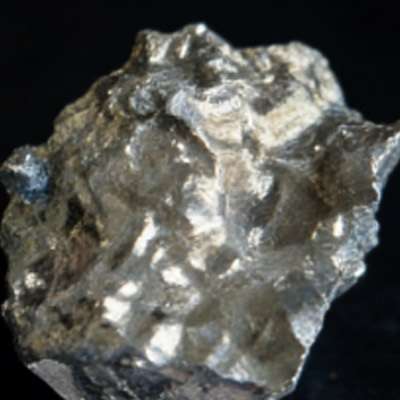
Chemical Composition and Specification Parameters (2025 Updated Standard)
| Element | Content Range | Remark |
| Chromium (Cr) | ≥67% | Minimum content, stable control |
| Carbon (C) | ≤0.01-0.03% | Meet 2025 new national standard requirements |
| Silicon (Si) | 0.5-1.5% | Optimized for smelting efficiency |
| Phosphorus (P) | ≤0.02-0.03% | Ultra-low impurity control |
| Sulfur (S) | ≤0.02% | Lower than industry average level |
| N/O/H | ≤0.01% each | Controlled by electromagnetic purification technology |
Packaging Specifications: Single block weight ≤15kg, particles below 10mm×10mm account for ≤10%, standard packaging is 1MT woven bag, customized packaging is available.
Application Scenarios: Leading the Transformation of High-Quality Stainless Steel
With the adjustment of the stainless steel product structure in 2025, the proportion of traditional 300-series stainless steel has decreased, while the demand for high-performance stainless steel in emerging fields such as new energy vehicles and aerospace has increased. Pure ferrochrome is particularly suitable for these high-end application scenarios:
New energy vehicle industry: Used in the production of stainless steel for power battery current collectors and fuel cell bipolar plates, which can improve corrosion resistance and electrical conductivity.
Aerospace field: Matching the production of precision alloys, meeting the strict requirements of ultra-low impurities for aerospace materials.
Construction and decoration field: Improving the weather resistance and service life of stainless steel products, reducing later maintenance costs.