
Ferroniobium, commonly abbreviated as FeNb, is a vital iron-niobium alloy that plays an irreplaceable role in modern metallurgy and high-end manufacturing. Unlike pure niobium, this alloy combines the excellent properties of iron and niobium, presenting a silver-gray appearance with high density, high boiling point, and superior corrosion resistance, as well as good electrical conductivity, making it widely used in various industrial fields.
As a key additive in steelmaking, ferroniobium is mainly used to optimize the performance of steel. Adding an appropriate amount of ferroniobium to molten steel can effectively refine the grain structure of steel, enhance its strength and toughness, and significantly improve its corrosion resistance. In addition to steelmaking, ferroniobium is also an essential raw material for the production of superalloys, high-temperature alloys, and other high-performance materials, which are widely used in aerospace, new energy, and other high-end fields.
Latest Ferroniobium Industry News in 2026: With the accelerating global energy transition and the booming development of high-end manufacturing, the demand for ferroniobium has maintained a steady growth trend. As of February 2026, the price of niobium metal has remained at a high level of 630-700 yuan per kilogram, a significant increase compared with the beginning of 2025, mainly driven by tight global supply, surging demand in high-tech fields, and geopolitical factors. Globally, 90% of niobium mines are monopolized by Brazil, and its export volume declined multiple times in 2025, coupled with the delayed commissioning of new mines in China’s northwest Hubei, leading to an expanding supply gap. At the same time, the recovery of China’s infrastructure investment has driven the growth of demand in the steel industry, while emerging fields such as aerospace and semiconductors have also seen a sharp increase in demand for ferroniobium, with global niobium consumption increasing by 12.3% year-on-year in 2025.
Another important industry trend is that ferroniobium is gradually expanding its application in emerging fields. In the field of controlled nuclear fusion, NbSn/Nb-Ti superconducting magnets used in fusion reactors account for more than 90% of superconducting materials, and a single reactor requires about 70 tons of niobium. With the deployment of the first phase of magnets in 2026, the demand for niobium will be further released. In addition, niobium-based batteries have emerged in the new energy vehicle sector due to their excellent fast-charging characteristics, and the demand for niobium in AI servers and 6G base station precision components is also continuously increasing, which is expected to become a new growth point for ferroniobium demand in the future.
Appearance of Ferroniobium: Ferroniobium is silver-gray in color, dense and hard in texture. It is prone to oxidation when exposed to air, and occasional traces of oxidation can be found on its surface, which is a normal phenomenon and does not affect its internal performance.
Physical Properties of Ferroniobium: In addition to high density and high boiling point, ferroniobium also has excellent electromagnetic properties, high-temperature stability, and corrosion resistance. Its high-temperature stability allows it to maintain stable performance in high-temperature environments above 1000℃, making it suitable for the production of high-temperature resistant components.
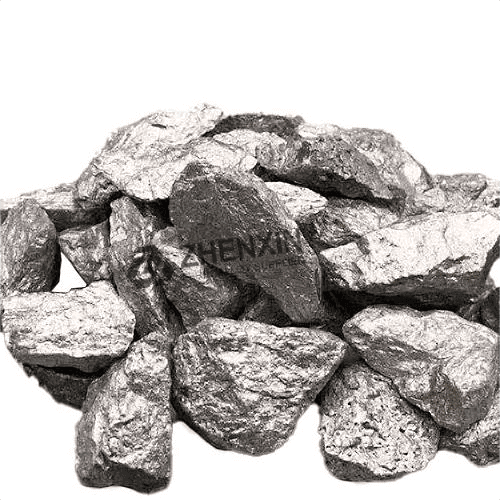
Chemical Properties of Ferroniobium: Ferroniobium is chemically active. When it comes into contact with acids, it can react to produce hydrogen gas. It is relatively stable in neutral and alkaline environments, which further expands its application scope in industrial production.
Ferroniobium Specifications and Chemical Composition: The chemical composition of ferroniobium varies according to its grade, and the content of impurities such as aluminum, silicon, carbon, sulfur, and phosphorus directly affects its performance. The following is a detailed table of common ferroniobium grades and their chemical compositions (unit: %):
| Grade | Al | Si | C | S | P |
| FeNb50 | 2% | 1.2% | 0.05% | 0.03% | 0.05% |
| FeNb60 | 2% | 2.5% | 0.2% | 0.1% | 0.2% |
| FeNb70 | 3.8% | 1.5% | 0.04% | 0.03% | 0.04% |
Ferroniobium Grades and Their Characteristics: Ferroniobium can be divided into 5 grades according to the content of aluminum and impurities, among which FeNb50, FeNb60, and FeNb70 are the most commonly used in the market. In addition, products with a niobium content of 99% are called metallic niobium, which is mainly used in high-precision fields.
Different grades of ferroniobium have different application scenarios in steelmaking and high-end manufacturing:
Ferroniobium with a niobium content of 50%-60% (FeNb50) is mainly used in the production of high-temperature alloys, stainless steel, and other metal materials, which can effectively improve the high-temperature resistance and corrosion resistance of the materials.
Ferroniobium with a niobium content of 60%-70% (FeNb60) is suitable for the production of alloys with specific performance requirements, and is widely used in the manufacture of high-temperature alloys and stainless steel, which are used in aerospace, automobile manufacturing, and other fields.
Ferroniobium with a niobium content of 70%-80% (FeNb70) has the characteristics of high density and low magnetism, so it is often used in electromagnetic shielding materials, and can also be used to produce special alloys for high-precision electronic components.
Main Applications of Ferroniobium: The application of ferroniobium covers a wide range of fields, and its role in steelmaking and high-end manufacturing is increasingly prominent.
In the steelmaking industry, ferroniobium is used as a key alloy additive. Adding an appropriate amount of ferroniobium to molten steel can refine the grain, improve the strength, toughness, and corrosion resistance of steel, so it is widely used in automobile manufacturing, bridge construction, pipeline laying, and other fields that have high requirements for steel performance.
In the field of high-end manufacturing, ferroniobium is an important raw material for the production of superalloys and high-temperature alloys. Due to its excellent high-temperature resistance, it is used to manufacture high-temperature resistant components for aerospace, such as engine blades and structural parts, which can ensure the stable operation of equipment in extreme environments.
2026 Ferroniobium Market Price Analysis: The global ferroniobium market price has maintained a steady upward trend since the end of 2024, with slight fluctuations but overall stability. Affected by the tight global supply and the continuous growth of downstream demand, the ferroniobium market has shown a pattern of tight supply and demand in 2026.
Looking back at the second half of 2024 to the end of the year: The price of Brazilian ferroniobium slightly loosened in July 2024, with the market quotation ranging from 233,000 to 236,000 yuan per ton. By the end of 2024, the price of domestic ferroniobium remained at a high level, with FeNb60-A quoted at 300,000 to 350,000 yuan per ton. Due to the high pressure of production costs and the continuous weakness of downstream demand, the spot inventory of domestic ferroniobium was small, manufacturers were not willing to stock up, and the market wait-and-see sentiment was strong. Downstream procurement was mainly based on on-demand purchases, and there was still pressure to suppress market prices.
In early 2025: The domestic ferroniobium market price increased slightly, and low-price resources were scarce. There were market rumors that major manufacturers might raise the quotation of new orders, leading to stronger reluctance of merchants to sell, and there were obvious signs of price increase.
In 2026: As of February, the price of niobium metal has remained at a high level of 630-700 yuan per kilogram. The main driving factors include the monopoly of global niobium supply by Brazil, the delayed commissioning of new domestic mines, the recovery of demand in the steel industry driven by infrastructure investment, and the surge in demand in emerging fields such as aerospace and semiconductors. Industry insiders predict that the ferroniobium market price will continue to maintain a steady upward trend in 2026, and the supply gap may further expand with the release of demand in emerging fields.