
Core Definition and Basic Properties of Calcium Metal
Calcium metal is an alkaline earth metal with the element symbol Ca and atomic number 20, presenting a silver-gray shiny metallic texture and extremely high chemical activity. When exposed to air, a black protective film composed of nitrides and oxides is quickly formed on the surface to prevent further oxidation of the internal metal. Its core physical properties are: relative density 1.54 g/mL (25℃), melting point between 839±2℃, boiling point up to 1484℃, easily soluble in acid and liquid ammonia, slightly soluble in ethanol, and insoluble in benzene. It is worth noting that the higher the purity of calcium metal, the slower the surface darkening rate in air, which is crucial for the storage and application of high-purity products.
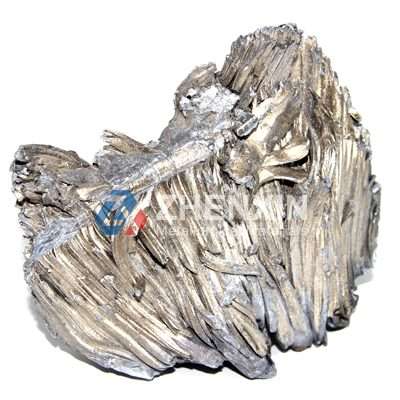
Specification Parameters and Product Information of High-Purity Calcium Metal (Ca98.5%)
Core Component Specifications (Mass Fraction)
| Component | Content Standard | Component | Content Standard |
| Calcium (Ca) | ≥98.5% | Manganese (Mn) | ≤0.03% |
| Chlorine (Cl) | ≤0.2% | Silicon (Si) | ≤0.01% |
| Nitrogen (N) | ≤0.1% | Iron (Fe) | ≤0.01% |
| Magnesium (Mg) | ≤0.8% | Aluminum (Al) | ≤0.5% |
| Copper (Cu) | ≤0.02% | Nickel (Ni) | ≤0.005% |
Core Product Information
| Item | Details | Item | Details |
| Product Name | Ca98.5% Calcium Metal | Standard | SGS, CIQ |
| Formula | Ca | MOQ | 25 tons |
| Shape | Lump, granule, powder, wire | Packaging | 1MT/bag; 125-250kg steel drum; customizable |
| Color | Silver-gray | Place of Origin | China |
| Size | 10-50mm, 10-100mm, 0-2mm, 0.1-1mm | Main Application | Casting, steelmaking |
Latest Trends in the Calcium Metal Industry (2024-2025)
In recent years, the calcium metal industry has undergone structural changes, showing three core trends especially in 2024-2025: First, the demand in the new energy field has grown explosively. According to industry reports, the global calcium metal market size will steadily climb to 6.5 billion yuan from the current level by 2025-2030, with a compound annual growth rate of 10.8%. Among them, the demand for high-purity calcium metal for new energy vehicle power batteries will grow at an average annual rate of over 15%, and the commercialization of solid-state battery technology will drive the market share of this segment to exceed 38% in 2028. Second, the upgrading of steelmaking process technology: the “hot-wire calcium treatment system” developed by the EU has achieved major breakthroughs. By feeding calcium wire coated in steel ladles, it reduces the evaporation loss of calcium in the high-temperature environment of molten steel, improves the effective utilization rate of calcium elements, and reduces the impurity content of molten steel. This technology has been gradually applied in the production of special steel. Third, calcium-based energy storage technology has made progress. The rechargeable Ca/Cl₂ battery developed by the research team of Shanghai Jiao Tong University uses gel electrolyte to achieve a high discharge voltage of 3V and a reversible specific capacity of 1000mAh/g, and has excellent low-temperature working performance (energy efficiency remains 92.2% at 0℃), laying the foundation for the diversified application of calcium metal in the energy storage field.
Analysis of Diversified Application Scenarios of Calcium Metal
Calcium metal’s application scenarios have gradually expanded from traditional metallurgical fields to multiple high-end fields such as new energy, aerospace, and chemical industry. The core applications can be divided into six categories:
Core Auxiliary in the Metallurgical Industry
As a key deoxidizer, desulfurizer and decarburizer in the steelmaking process, calcium metal can quickly react with impurities such as oxygen and sulfur in molten steel to form liquid inclusions (calcium oxide, calcium sulfide, etc.) by virtue of its strong affinity for oxygen and sulfur. These inclusions can float and separate in molten steel or be converted into fine spherical particles during processing, significantly improving molten steel cleanliness, pouring performance and mechanical strength. Under the trend of green steelmaking in 2025, the penetration rate of calcium-based deoxidizers in short-process steelmaking has increased from 45% in 2020 to 68%, becoming an essential raw material for high-end steel production.
Emerging Applications in the New Energy Field
In the new energy field, the application of calcium metal has shown two major breakthroughs: first, in the power battery field, as the core raw material of lead-calcium alloy, it is used in the manufacture of power battery plates to improve battery cycle life and charge-discharge stability; second, in the energy storage field, calcium-based energy storage materials have gradually replaced traditional materials in sodium-ion batteries and solid-state batteries due to their advantages of high element abundance and low cost, and it is expected to form an emerging market scale of about 1.2 billion yuan by 2027. In addition, the successful development of rechargeable Ca/Cl₂ batteries has further broadened the application space of calcium metal in low-temperature energy storage scenarios.
Other Mainstream Application Scenarios
In addition to the above fields, calcium metal is also widely used in: ① Rare earth metal smelting, as a high-efficiency reducing agent for the preparation of high-purity rare earth metals; ② Chemical industry, acting as organic solvent dehydrating agent, oil and gas purifier, and nitrogen-argon mixture separation material; ③ Electronic industry, as a getter in electron tube production to remove residual gas in the tube; ④ Aerospace field, as an alloying element of calcium-aluminum alloy to improve material corrosion resistance and mechanical properties, and the localization rate in this field is expected to increase from 42% in 2023 to 68% in 2026; ⑤ Pharmaceutical and construction fields, used in the preparation of drug synthesis raw materials and calcium-based building materials.
Advanced Production Processes and Technological Upgrades of Calcium Metal
After years of development, the production process of calcium metal has gradually transformed from the traditional electrolysis method to the high-efficiency and low-consumption reduction method. At the same time, high-purity refining technology has continuously made breakthroughs. The core processes include three categories:
Mainstream Production Process: Reduction Method
The reduction method has become the mainstream process for calcium metal production, accounting for 65% of the industry’s total production capacity in 2025. This process uses limestone as raw material, which is calcined to generate calcium oxide, then mixed with aluminum powder in proportion, crushed and pressed into blocks, and undergoes reduction reaction in a vacuum high-temperature environment to generate calcium vapor and calcium aluminate; calcium vapor is condensed and reduced to crystalline calcium, and finally made into calcium ingots by casting. Compared with traditional processes, the reduction method has the advantages of large production capacity, low energy consumption and high product purity. The unit energy consumption is 40% lower than that of traditional processes, which is in line with the national “dual carbon” strategic requirements.
Traditional Process: Electrolysis Method
The electrolysis method is the main early process for calcium metal production and is still used for the production of some low-end products. After technological upgrading, this process has been improved from the traditional contact method to the liquid cathode electrolysis method: calcium-copper alloy (containing 10%-15% calcium) is used as the liquid cathode, graphite electrode as the anode, and the electrolytic calcium is deposited on the cathode; the shell of the electrolytic cell is made of cast iron, and the electrolyte is a mixture of calcium chloride and potassium chloride. Copper is selected as the alloy component of the liquid cathode because the copper-calcium phase diagram has a very wide range of low melting points in the high calcium content area, and calcium-copper alloys with 60%-65% calcium can be prepared at less than 700 degrees Celsius. The calcium-copper alloy produced by electrolysis is vacuum distilled to obtain metallic calcium. The traditional contact method for producing calcium metal has disadvantages such as large raw material consumption, high solubility of metallic calcium in the electrolyte, low current efficiency, and poor product quality, and has been gradually replaced by the liquid cathode electrolysis method.
High-Purity Refining Process
High-purity calcium products can be prepared from industrial-grade calcium metal through a high-vacuum distillation process. Usually, the distillation temperature is controlled at 780-820℃, and the vacuum degree is maintained at 1×10⁻⁴Pa. It should be noted that the distillation treatment has a poor effect on purifying chloride impurities in calcium. Nitrogen can be added during the distillation process to form double salts with impurities, and then combined with vacuum distillation purification, the total content of impurity elements such as chlorine, manganese, copper, iron, silicon, aluminum, and nickel in calcium can be reduced to 1000-100ppm, that is, high-purity calcium metal with a purity of 99.9%-99.99% can be obtained, which meets the application requirements of high-end fields such as new energy and electronics.