
Introduction
Ferrosilicon slag is a by-product generated during the smelting of ferrosilicon alloys. It was once regarded as industrial waste for stacking and disposal, which not only occupies land resources but also may cause environmental impacts. In recent years, with the deepening of the concepts of circular economy and green metallurgy, the resource utilization value of ferrosilicon slag has been widely explored, transforming from “industrial waste” into an important renewable resource in many fields such as metallurgy and construction. According to industry data, the scale ratio of resourceful treatment of ferrosilicon-related slags worldwide has reached nearly 48% in 2025, and the annual growth rate of the market scale is expected to maintain between 12% and 15% in 2026.
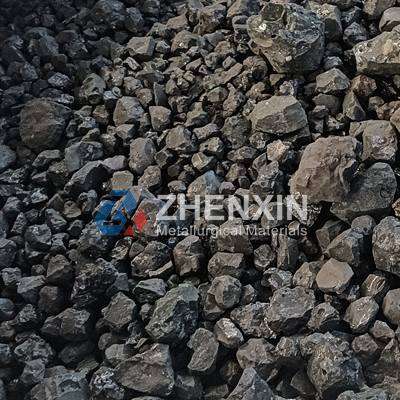
Main Components
The chemical composition of ferrosilicon slag is mainly composed of oxides of silicon, calcium and aluminum, and contains a small amount of impurities such as iron and manganese. Its composition ratio will fluctuate slightly with smelting raw materials and processes. The proportion of core components is as follows: silicon dioxide (SiO₂) content is 40%-60%, which is the main framework component of ferrosilicon slag; calcium oxide (CaO) content is 20%-30%, which can improve the activity of the slag; aluminum oxide (Al₂O₃) content is 5%-10%, which can adjust the physical and chemical properties of the slag; the content of impurities such as iron (Fe) and manganese (Mn) is low, which has little impact on its application value overall.
Specification Standards
The specification division of ferrosilicon slag is mainly based on the silicon (Si) content, and different grades of ferrosilicon slag are suitable for different application scenarios. The following are the general specification standards and chemical composition requirements (mass fraction) in the industry:
| Grade | Si Content (%) | Fe Content (%) | C Content ≤ (%) | S Content ≤ (%) | P Content ≤ (%) |
| 60%FeSi Slag | 60-63 | 15-17 | 4.0 | 0.05 | 0.05 |
| 65%FeSi Slag | ≥65 | 15-17 | 4.0 | 0.05 | 0.05 |
| 70%FeSi Slag | ≥70 | Balance | 4.0 | 0.05 | 0.05 |
Differences Between Silicon Slag and Ferrosilicon Slag
In the industry, silicon slag and ferrosilicon slag are often confused. Although both are smelting by-products, they have significant differences in production source, composition and use. The specific differences are as follows:
| Comparison Dimension | Silicon Slag | Ferrosilicon Slag |
| Production Source | Waste slag generated during the smelting of Silicon Metal | Waste slag generated during the smelting of Ferrosilicon Alloy |
| Core Component | Silicon content 50%-70%, impurities are mainly non-metallic oxides | Silicon content 40%-70%, containing 20%-30% calcium oxide, iron content above 15% |
| Main Uses | When silicon content ≥50%, it can be used for casting and steelmaking deoxidation to reduce production costs | Metallurgical deoxidation, cement production, concrete admixture, ceramic raw material, etc. |
| Performance Characteristics | High silicon activity and targeted deoxidation | Good comprehensive activity, suitable for multi-field application scenarios |
Main Uses
Relying on its unique chemical composition and physical and chemical properties, ferrosilicon slag has realized resource utilization in multiple fields, especially its application in metallurgy, construction and other industries is increasingly mature, and breakthroughs have also been made in the exploration of applications in high-end fields:
In the steelmaking process, ferrosilicon slag can replace ferrosilicon as a deoxidizer, especially suitable for steel products with low silicon content requirements. It can not only ensure the deoxidation effect but also reduce smelting costs. In addition, ferrosilicon slag can also be used as an auxiliary raw material for ironmaking, participating in burden ratio to improve smelting efficiency. In 2025, a breakthrough was made in the technology of iron extraction from high-silicon iron-bearing smelting slag and synergistic utilization of all components of tailings, further tapping the value of valuable metals in ferrosilicon slag.
Ferrosilicon slag can be used in cement production as a admixture to replace part of the clinker, improving cement strength and reducing production costs; at the same time, crushed ferrosilicon slag can be used as a concrete admixture to improve the workability and durability of concrete. At present, the construction material field is still the main channel for ferrosilicon slag absorption, accounting for more than 60%.
Adding an appropriate amount of ferrosilicon slag to ceramic raw materials can adjust the firing temperature of ceramic green bodies, improve the density and wear resistance of ceramic products, and reduce raw material procurement costs, which has been widely used by some ceramic enterprises.
With the progress of purification technology, ferrosilicon slag is gradually being applied in high-end fields such as silica fume preparation, providing low-cost silicon raw material supplements for the photovoltaic and semiconductor industries. It is expected that by 2030, the proportion of applications in high-end fields will increase to more than 30%.
Market Price & 2026 Industry Dynamics
The market price of ferrosilicon slag is affected by factors such as ferrosilicon market fluctuations, composition content and quality grade, and the overall price is much lower than that of ferrosilicon products. At the beginning of 2026, the domestic market price of ferrosilicon 75 remained in the range of 6200-6400 yuan/ton, while the price of ferrosilicon slag ranged from several tens to several hundred yuan per ton according to silicon content and impurities, among which ferrosilicon slag with high silicon (≥65%) and low impurities had a relatively higher price.
The ferrosilicon slag industry ushered in a number of important developments in 2026: first, at the policy level, multiple economies have strengthened industrial solid waste resource utilization policies, requiring some regional ferrosilicon production enterprises to reach specific standards for slag comprehensive utilization by the end of 2026, promoting the standardized development of ferrosilicon slag resource utilization; second, at the market level, the global ferrosilicon slag resource utilization market scale continues to grow. As the world’s largest ferrosilicon producer, China accounts for more than 70% of the global ferrosilicon slag output, and has inherent advantages in technology research and development and large-scale application; third, at the futures market level, Zhengzhou Commodity Exchange revised the ferrosilicon futures business rules, clarifying the compensation plan for excessive particle size of screen underflow in ferrosilicon outbound re-inspection, which will take effect in February 2027, indirectly affecting the market circulation standards of ferrosilicon slag.
Application Advantages
As a renewable industrial resource, the application of ferrosilicon slag has significant dual economic and environmental advantages: first, cost advantage, replacing raw materials such as ferrosilicon and natural ore can greatly reduce enterprise production costs and improve product market competitiveness; second, resource advantage, realizing the resource utilization of industrial waste slag, reducing land occupation and environmental pollution, in line with the concept of green development; third, adaptability advantage, which can be customized and processed into particle sizes (such as 0-50mm, 50-100mm, etc.) according to the needs of different industries to meet diverse application scenarios; fourth, compliance advantage, in line with the current global policy orientation of solid waste resource utilization, helping enterprises achieve compliant production and operation.