
Ferro Silicon (FeSi): The Invisible Cornerstone of Modern Industry
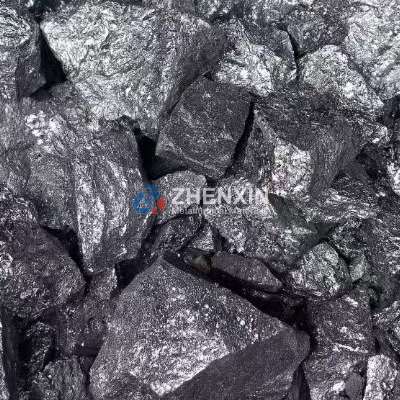
Within the vast framework of modern industry, certain materials, though inconspicuous, are fundamentally critical. Ferro Silicon (FeSi), an alloy scientifically smelted from silicon and iron, is precisely such a foundational material. Exhibiting a distinctive metallic, bread-like hue, it is extensively utilized in pivotal sectors including steelmaking, magnesium metal production, and the foundry industry, earning it the moniker “the staple food” of metallurgy. This article provides a comprehensive examination of Ferro Silicon’s properties, manufacturing processes, diverse applications, and market dynamics, revealing the indispensable value of this essential alloy.
Analysis of Core Physical and Chemical Properties
Ferro Silicon is a classic iron-silicon alloy whose core value is determined by its silicon content. Common market grades such as FeSi75 and FeSi72 are designated by their minimum silicon percentage by mass. In addition to the primary components silicon and iron, the product contains trace elements like manganese, chromium, phosphorus, sulfur, and carbon, which are strictly controlled and serve as key indicators of product quality.
The physical properties of Ferro Silicon have a precise correlation with its silicon content. Regarding melting point, higher silicon content corresponds to a relatively lower melting point. For instance, the melting range for grades 72 to 80 is approximately 1290°C to 1360°C, while standard FeSi75 melts around 1300°C. Density exhibits an inverse trend, decreasing as silicon content increases. FeSi75, for example, has a density of about 3270 kg per cubic meter. This density characteristic allows it to be used as a heavy medium in industries like mineral processing.
To meet the varied process requirements of downstream industries, professional Ferro Silicon suppliers offer a complete product series ranging from large lumps and standard-sized blocks (e.g., 10-50mm, 50-100mm) to various fine powders (e.g., 0-1mm, 1-3mm, 3-10mm). This diversity in form ensures Ferro Silicon can be flexibly applied across different scenarios, from blast furnace charging to specialized welding electrode manufacturing.
Core Applications in Key Industrial Sectors
The value of Ferro Silicon is fully demonstrated through its critical roles in several pillar industries.
Firstly, in the steel industry, Ferro Silicon plays a dual core role. It is one of the most important and economical deoxidizers. Added during steelmaking, it effectively removes oxygen from molten steel, significantly enhancing the purity and quality of the final product. Simultaneously, it serves as an efficient alloying element additive. When smelting various special steels, such as structural steel, spring steel, bearing steel, and electrical silicon steel, adding Ferro Silicon optimizes mechanical properties, including increased strength, hardness, elasticity, and magnetic permeability.
Secondly, Ferro Silicon is an indispensable reducing agent in magnesium metal production. In the predominant Pidgeon process, high-silicon Ferro Silicon is required to reduce magnesium oxide under high-temperature vacuum conditions to produce metallic magnesium. Industry estimates indicate that producing one ton of magnesium consumes approximately 1.3 tons of Ferro Silicon, which constitutes a significant portion of the total production cost, highlighting its strategic importance in the magnesium industry.
Furthermore, in the foundry sector, Ferro Silicon is an excellent inoculant. Its addition to molten cast iron promotes graphite precipitation and spheroidization, improving the microstructure of the iron and thereby enhancing the mechanical properties of castings, particularly the toughness and strength of ductile iron.
Additionally, Ferro Silicon powder finds specialized uses in other fields. For instance, it is used in welding electrode coating manufacture, and in mineral processing, its suitable density allows it to be used as a heavy-medium suspension for ore separation.
Production Process and Quality Control
The production of Ferro Silicon is a technology-intensive and energy-consuming process, typically carried out in large submerged arc furnaces.
The primary raw materials include quartz or quartzite rich in silicon dioxide, metallurgical coke as the reductant, and steel scrap used to adjust the final product composition. These materials are precisely proportioned and fed into a closed submerged arc furnace. Under the intense heat of the electric arc, reaching temperatures between 1500°C and 1800°C, the coke reduces the silicon from the silica. The molten silicon then combines with iron to form the Ferro Silicon alloy. Producing one ton of standard FeSi75 requires approximately 1780-1850 kg of silica, 890-930 kg of coke, 220-230 kg of steel scrap, and consumes 8400-9000 kWh of electrical energy, underscoring its status as an “energy-intensive product.”
Product quality consistency is paramount. Stable, qualified products across various grades from FeSi65 to FeSi75 are achieved through advanced process control systems that precisely regulate raw material ratios, furnace temperature, reaction time, and tapping schedules. Leading manufacturers typically implement comprehensive quality traceability systems to ensure every batch meets or exceeds national standards and customer specifications.
Global Market Dynamics and Demand Outlook
The global demand for Ferro Silicon is closely tied to the development cycles of foundational industries like steel and magnesium, forming a solid demand foundation.
The steel industry acts as the ballast for Ferro Silicon demand. As the world’s most produced basic material, the continuous output of steel generates stable and massive demand for Ferro Silicon. Although the consumption per ton of steel is only about 4-5 kg, representing a small fraction of the cost per ton of steel, the aggregate demand due to the enormous total volume of steel production is significant. Currently, as the global steel industry transitions towards greener and more high-end production, the growing demand for high-performance special steels indirectly raises the requirements for high-quality Ferro Silicon.
The vigorous development of the magnesium industry injects strong growth momentum into Ferro Silicon demand. Magnesium alloys, prized for their excellent lightweight properties, are seeing expanding application in new energy vehicles, aerospace, consumer electronics, and more. As a core raw material for magnesium production, demand for Ferro Silicon is directly linked to magnesium output. Industry analysis suggests that as the trend towards automotive lightweighting accelerates and the adoption rate of magnesium alloys increases, demand for Ferro Silicon in this sector is entering a new growth phase.
In the international trade landscape, China is the most significant global producer and exporter of Ferro Silicon, supplying markets in Japan, South Korea, the United States, India, Europe, and beyond. Consequently, changes in China’s industrial policies, energy costs, and environmental regulations profoundly impact the price and stability of the global Ferro Silicon supply chain. Partnering with a Chinese producer possessing strong production capacity and stable export capability is crucial for international buyers seeking to ensure supply chain security.
Strategic Considerations for Selecting a Premium Supplier
In a competitive market, choosing a reliable and competitive Ferro Silicon supplier is a key strategic decision for downstream companies to ensure production continuity and control overall costs.
A superior supplier must first possess robust production capability and excellent quality consistency. This means owning and controlling modern smelting facilities, employing advanced production technologies, and maintaining a strict quality management system to guarantee the long-term, stable supply of products with precise chemical compositions and a complete range of physical specifications.
A direct supply model often delivers significant cost advantages. As a source manufacturer selling directly to end-users, it can eliminate markups from intermediate trading links, offering more competitive ex-works prices and better guaranteeing material supply for key customers during periods of tight availability.
Furthermore, customization capability reflects a supplier’s value as a deep-cooperation partner. The ability to provide flexible, tailored product solutions based on a client’s specific production processes (such as special particle size distribution requirements or specific restrictions on certain trace elements) elevates a supplier from a simple product vendor to a trusted solutions partner.
Finally, extensive global service experience is particularly important for international purchasers. A mature exporter should be well-versed in international logistics, customs compliance, documentation, and localized after-sales service, ensuring a smooth and worry-free process from order placement to receipt of goods.
Conclusion
In summary, as a classic metallurgical material, the importance of Ferro Silicon has not diminished over time but has instead been continually reinforced by the upgrading and expansion of downstream industries. Its contribution is deeply embedded in the fabric of modern civilization, from the steel structures of skyscrapers to the lightweight components of speeding vehicles. Looking ahead, as global industry continues evolving towards greener, more efficient, and higher-quality production, the demands on Ferro Silicon products regarding quality, stable supply, and supporting services are also increasing. Establishing strategic partnerships with top-tier producers who excel in technology, guarantee capacity, and prioritize reputation represents a wise choice for downstream manufacturing enterprises aiming to build resilient and robust supply chains in a complex global market.