
What Is Medium Carbon Ferro Manganese?
Medium carbon ferro manganese is an alloy mainly made up of manganese and carbon. It contains 78-82% manganese and 1.0-2.0% carbon, with very little sulfur and phosphorus. It can be produced in two ways: either by refining high carbon ferro manganese to reduce its carbon content, or by mixing high carbon and low carbon types to get the right composition.
This type of alloy provides a middle solution between high carbon FeMn (over 6% carbon) and low or ultra-low carbon FeMn (below 0.5%). That makes it ideal for steelmakers who need moderate carbon control without increasing cost too much or losing performance.
How Does Medium Carbon Ferro Manganese Compare to Other Types?
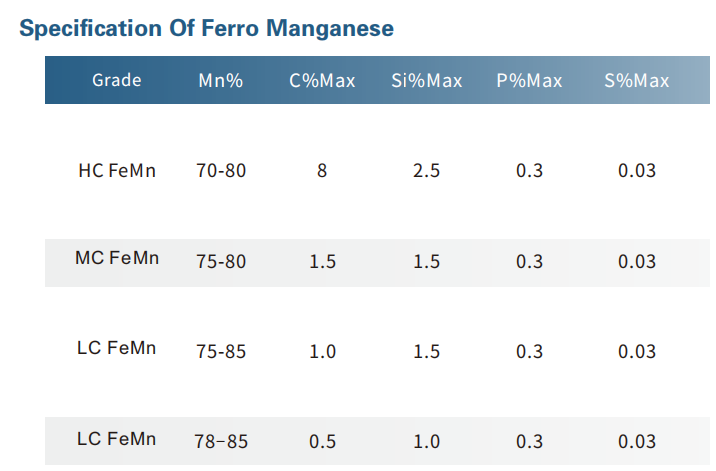
From the table, you can see medium carbon ferro manganese sits between high and low carbon types. It keeps a steady amount of manganese while having a controlled level of carbon. This makes it great for things that need strength but shouldn’t be too hard or easy to break.
Now that we know what medium carbon ferro manganese is, let’s look at why it works well in making steel.
Process Benefits: Why Steelmakers Choose Medium Carbon FeMn
To better understand the value of medium carbon FeMn, we can look at two key process benefits: carbon control and Mn:C ratio management.
1. The Right Carbon Level for Toughness
Using high carbon FeMn can lead to too much carbon in steel, which may make the material harder but also more brittle. While low carbon FeMn gives very little carbon but is more expensive.
Medium carbon ferro manganese finds a good balance. It has enough carbon to help with strength changes when steel is heat-treated, but not so much that it causes issues.
2. Better Control of the Mn:C Ratio
Manganese makes steel stronger and better at handling heat treatments. But how well it works depends a lot on how much carbon there is compared to manganese. Medium carbon ferro manganese lets steel makers adjust this balance exactly, especially for steels that need to be both flexible and able to resist wear.
Knowing how it helps in the steel-making process, let’s see where it’s actually used.

Real Applications of Medium Carbon Ferro Manganese in Steel Production
Medium carbon ferro manganese is often used to make structural alloy steels, tool steels, and forged parts. It’s especially useful for:
- Gears and shafts that need both strength and toughness
- Rail steel and car parts that need to resist wear
- Engineering steels where controlling the carbon and manganese ratio helps with heat treatments
Manganese also helps remove oxygen and sulfur from steel, making the final product tougher and stronger. The medium carbon content lets steel makers balance making the steel’s structure finer and controlling its hardness, so it works well in many different alloy steels.
Besides process control, medium carbon FeMn also supports cleaner and more efficient steelmaking. Let’s explore how.
Environmental and Efficiency Advantages of Medium Carbon Ferro Manganese
1. Less Rework, Lower Emissions
One hidden cost in steel refining is the need to reprocess batches when carbon levels go too high. This often happens with high carbon FeMn. It may lead to:
- Unwanted extra carbon in the steel
- More steps to refine the steel again
- More slag (the waste from smelting)
But medium carbon ferro manganese (with 1.0-2.5% carbon) controls carbon levels more precisely. This means less need to remove extra carbon and fewer mistakes that require re-working the steel.
Less re-working means fewer emissions, less wear on equipment, and lower costs for handling slag.
2. Less Manganese Lost to Oxidation
In electric arc furnaces or open ladles, a lot of manganese can be lost because it reacts with oxygen—especially if it’s not added evenly. Medium carbon ferro manganese usually has:
- A high recovery rate for manganese (85-90%)
- Less smoke and dust when added to the furnace
- More predictable results in how much usable material is produced in electric arc furnaces and ladle furnaces
This not only saves money but also reduces small particles and manganese-containing slag. In many places, these are regulated to protect the environment.
In today’s push to reduce carbon emissions, every bit of material saved and every unit of energy cut counts. Medium carbon ferro manganese offers a practical way to reduce waste, cut emissions, and make the process more efficient—without hurting steel quality.

Final Thoughts:
If you’re looking to improve steel toughness, reduce production waste, and manage carbon content more easily, medium carbon FeMn is a smart and balanced solution.
Its chemical stability, reliable performance, and environmental benefits make it suitable for modern, cost-conscious steelmakers—especially those producing alloy and special steels.