
In the metallurgical industry, achieving high-quality metal products hinges on precise control over the chemical composition and purity of molten metals. High-magnesium cored wire has become a pivotal tool in this regard, facilitating critical processes such as deoxidation, desulfurization, and modification in steelmaking and casting.
—
1. Product Overview: Composition and Physical Properties
High-magnesium cored wire consists of a steel sheath encapsulating a core of magnesium powder, alloying elements (e.g., silicon, calcium, barium), and rare earth metals. Key specifications include:
– **Core Composition**: Magnesium content ranges from **15% to 40%**, depending on application requirements, with additives like silicon (30–50%), and rare earth elements (2–5%) to optimize performance.
– **Physical Parameters**: Standard wire diameters are **9 mm or 13 mm** (±0.5 mm tolerance), encased in a steel strip of **0.45 mm thickness**. Packaging typically involves plastic-wrapped coils within Iron frame for durability and ease of transport.
– **Customization**: Manufacturers offer tailored formulations to meet specific metallurgical needs, such as adjusting magnesium reactivity or enhancing desulfurization efficiency.
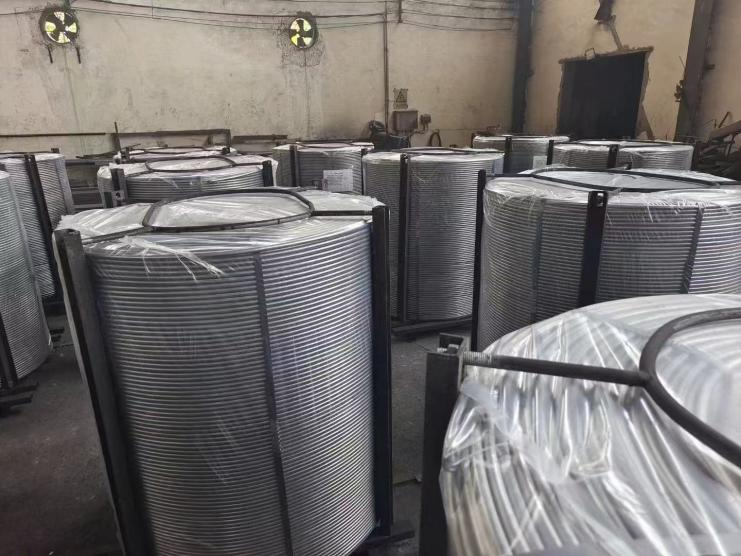
The specifications of high magnesium cored wire (supplied by Zhenxin Metallurgical Materials Co., Ltd.) are as follows for your reference:
Mg: 30%min, Si:40%min, Ca:2-5%, Re:2-5%
Core Weight: 240g/m
Strip thickness: 0.45mm
Wire Diameter: 13mm
These elements are carefully balanced to achieve optimal performance in metallurgical applications.
—
2. Applications in Metallurgical Processes
High-magnesium cored wire is integral to refining and alloying in both steelmaking and casting:
A. Steelmaking
– Desulfurization: Magnesium’s strong affinity for sulfur reduces sulfur content in molten steel from **0.035% to below 0.020%**, significantly improving steel purity and mechanical properties.
– Deoxidation: By binding with oxygen, magnesium minimizes oxide inclusions, enhancing steel ductility and fatigue resistance.
-Modification: Rare earth elements in the wire refine non-metallic inclusions (e.g., sulfides), reducing defects in high-grade steel products, improving the steel’s workability and surface finish.
B. Foundry and Ductile Iron Production
– Nodularization: In ductile iron manufacturing, magnesium promotes the formation of spherical graphite structures, ensuring superior strength and machinability.
– Cost-Effective Refining: Replaces traditional ladle furnace treatments, streamlining processes in electric arc furnaces (EAFs) and reducing energy consumption.
– Purification: It assists in purifying the molten metal, reducing the presence of harmful elements and inclusions.
3. Advantages of High-Magnesium Cored Wire
Adopting this technology delivers multifaceted benefits:
– Enhanced Alloy Efficiency: Magnesium recovery rates exceed 80%, minimizing material waste compared to direct alloy additions.
– Process Stability: Controlled release of magnesium reduces splashing and secondary oxidation, ensuring consistent metallurgical reactions.
– Cost Savings: Lowers refining time, energy use, and greenhouse gas emissions. For example, replacing manual alloying with automated wire feeding can reduce costs by **15–20%**.
– Environmental Compliance: Meets stringent regulations by reducing slag generation and toxic emissions.

4. Market Trends and Future Outlook
The global cored wire market is projected to grow from USD 0.35 billion in 2023 to USD 0.39 billion by 2032, at a CAGR of 1.5% during the forecast period.
This growth is driven by the increasing demand for high-quality steel and castings across various industries, including automotive, construction, and manufacturing. The adoption of high-magnesium cored wire is expected to rise as metallurgical companies seek to enhance product quality and production efficiency.
Future Projections:
– Advanced Coatings: Emerging technologies, like silica-treated magnesium particles, improve stability and reactivity.
– Automation Integration: AI-driven feeding systems will enable precise dosing, further boosting efficiency.
– Non-Ferrous Expansion: Potential applications in aluminum and copper refining are under exploration.
—
5. Conclusion:
High-magnesium cored wire stands as a vital additive in the metallurgical industry, offering significant benefits in refining processes and casting applications. Its ability to enhance metal purity, improve mechanical properties, and reduce production costs makes it an indispensable tool for metallurgical enterprises.
Act Now: Explore tailored solutions for your steelmaking or foundry needs. Contact our team today to request technical specifications, pricing details, or customized formulations. Let us help you unlock the full potential of your metallurgical processes.
About Us
As a leading supplier of advanced metallurgical materials, we specialize in high-performance cored wires designed for precision and reliability. Our commitment to customer-centric solutions ensures you stay ahead in a competitive market.
Visit our website www.zxferroalloy.com Or contact info@zxferroalloy.com for more information.